
USD


Levamisole hydrochloride is a crystalline reagent often used to control enzyme reactions and calibrate instruments. Moreover, it dissolves easily in water and delivers stable results in routine assays. This article presents its key data, handling tips, and sourcing advice for laboratory teams.
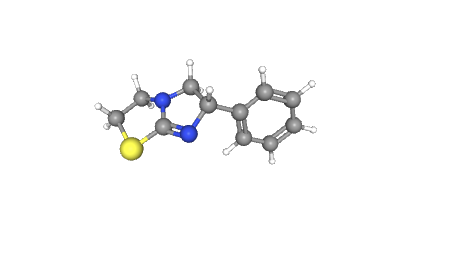
Levamisole HCl is the active form of tetramisole that readily dissolves in water. In simple terms, it is a salt version that ensures consistent behavior in biochemical tests. Therefore, researchers prefer it when accuracy and reproducibility are important.
| Parameter | Value / Notes |
|---|---|
| CAS number | 16595-80-5 |
| Chemical name | (6S)-6-phenyl-2,3,5,6-tetrahydroimidazo[2,1-b][1,3]thiazole hydrochloride |
| Formula | C11H12N2S · HCl |
| Molar mass | ≈ 240.8 g·mol⁻¹ |
| Appearance | White to off-white crystals |
| Melting point | 266–267 °C (decomposition) |
| Solubility | Freely soluble in water; soluble in ethanol; limited in non-polar solvents |
| Storage | 2–8 °C in a dry, sealed container (hygroscopic) |
For a short guide to reagent grades, visit Understanding purity grades in research reagents.
Scientists use Levamisole HCl to block unwanted alkaline phosphatase activity. As a result, enzyme assays become more specific and reliable. Furthermore, its inhibition pattern is well documented in PubChem and the ECHA substance profile, which describe its interaction with enzyme systems.
Analysts often prepare Levamisole HCl standards to verify chromatography or spectroscopy settings. In addition, its strong water solubility helps produce accurate concentrations with minimal error. The ChemSpider record lists synonyms and molecular identifiers useful for cross-referencing analytical data.
In *C. elegans* worms, Levamisole affects nerve-muscle communication. This effect allows scientists to study movement and neurotransmission under controlled conditions. Because results are consistent across experiments, this reagent remains a dependable laboratory tool.
Always handle Levamisole HCl in a fume hood while wearing gloves, goggles, and a lab coat. According to PubChem hazard data and ECHA classification, the compound may be harmful if swallowed and can irritate eyes or skin. Therefore, limit direct contact and wash any exposed area immediately.
Keep containers sealed at 2–8 °C in a dry cabinet. Moreover, use desiccant to protect against humidity. Prepare solutions only when needed, label them clearly, and avoid repeated thawing. These steps maintain stability and prevent contamination.
Collect residues as hazardous waste. For small spills, cover the area with absorbent material and transfer it to a sealed bag. Then clean the surface using mild detergent and dispose of all waste according to your institution’s safety policy.
Choose Levamisole HCl with purity above 99 %. Ask suppliers for a Certificate of Analysis confirming composition and moisture levels. For independent verification, review the PubChem analytical data section and the Sigma-Aldrich reference listing. Together, these resources help confirm that your material meets analytical standards.
In regulated work, select an official quality standard. In other cases, a high-purity research grade performs well. Additionally, order moisture-resistant packaging and small pack sizes to preserve quality during long projects.
Reliable suppliers share COAs and stability data for every lot. You can view CristalChem’s verified batches here: Levamisole HCl — CAS 16595-80-5 (CristalChem).
Levamisole HCl has three major laboratory uses. First, it reduces background noise in enzyme assays. Second, it serves as a calibration compound for analytical instruments. Finally, it assists studies on nerve transmission in biological models. These diverse functions explain its popularity across R&D disciplines.
Explore related CristalChem articles: Purity grades in research reagents, Benzocaine crystalline reagent, and Menthol crystals in R&D.
Ready to use certified reagents? Check specifications and availability: Explore Levamisole HCl at CristalChem.
R&D disclaimer: For laboratory and R&D use only. Not for human or veterinary use.
Data verified through PubChem, ECHA, and ChemSpider.
Last updated: October 2025 — CristalChem R&D Editorial Team.

Chemical Research Writer at CristalChem Academy. Passionate about chemistry, R&D, and turning laboratory insights into global wellness and industrial innovations.