USD


$128.03
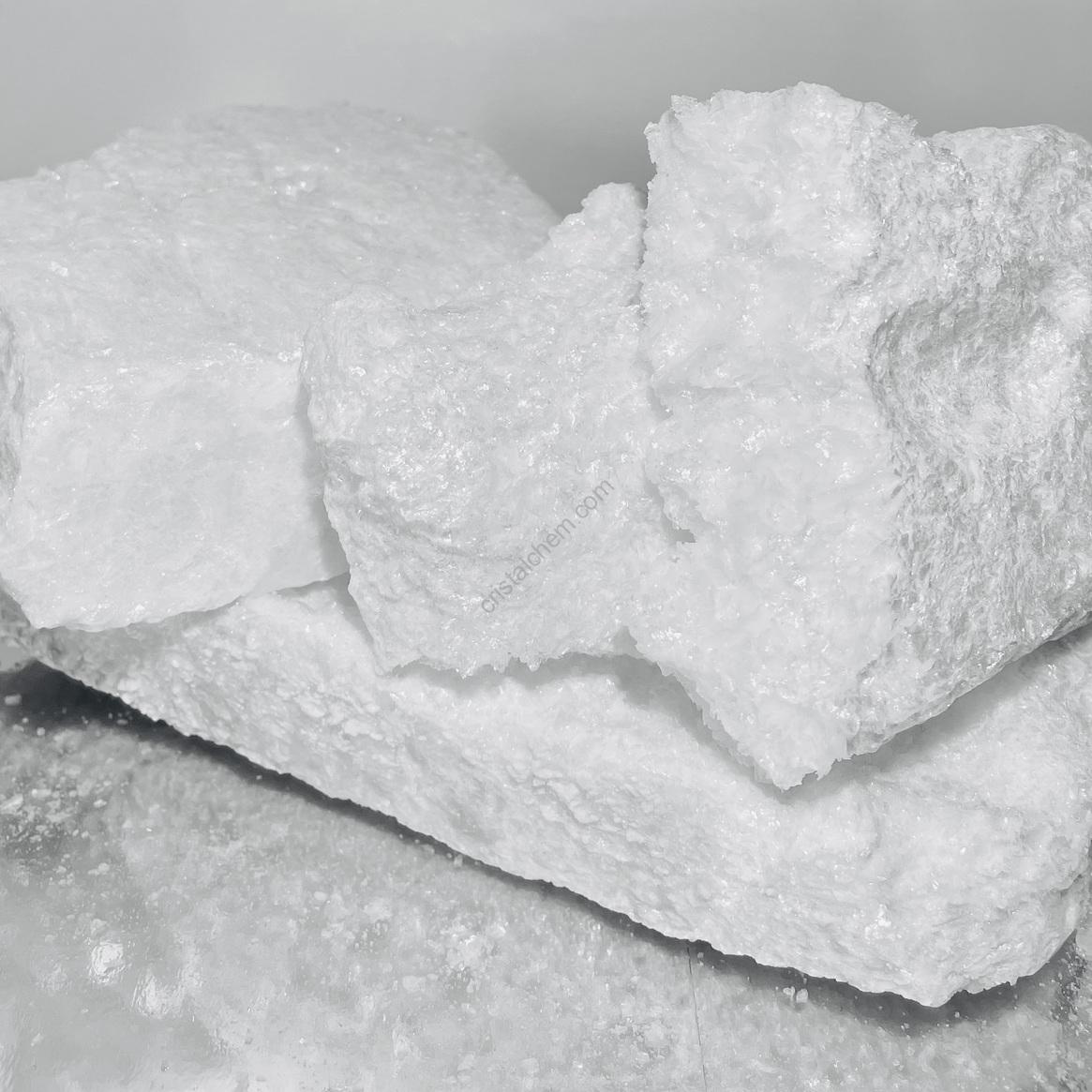
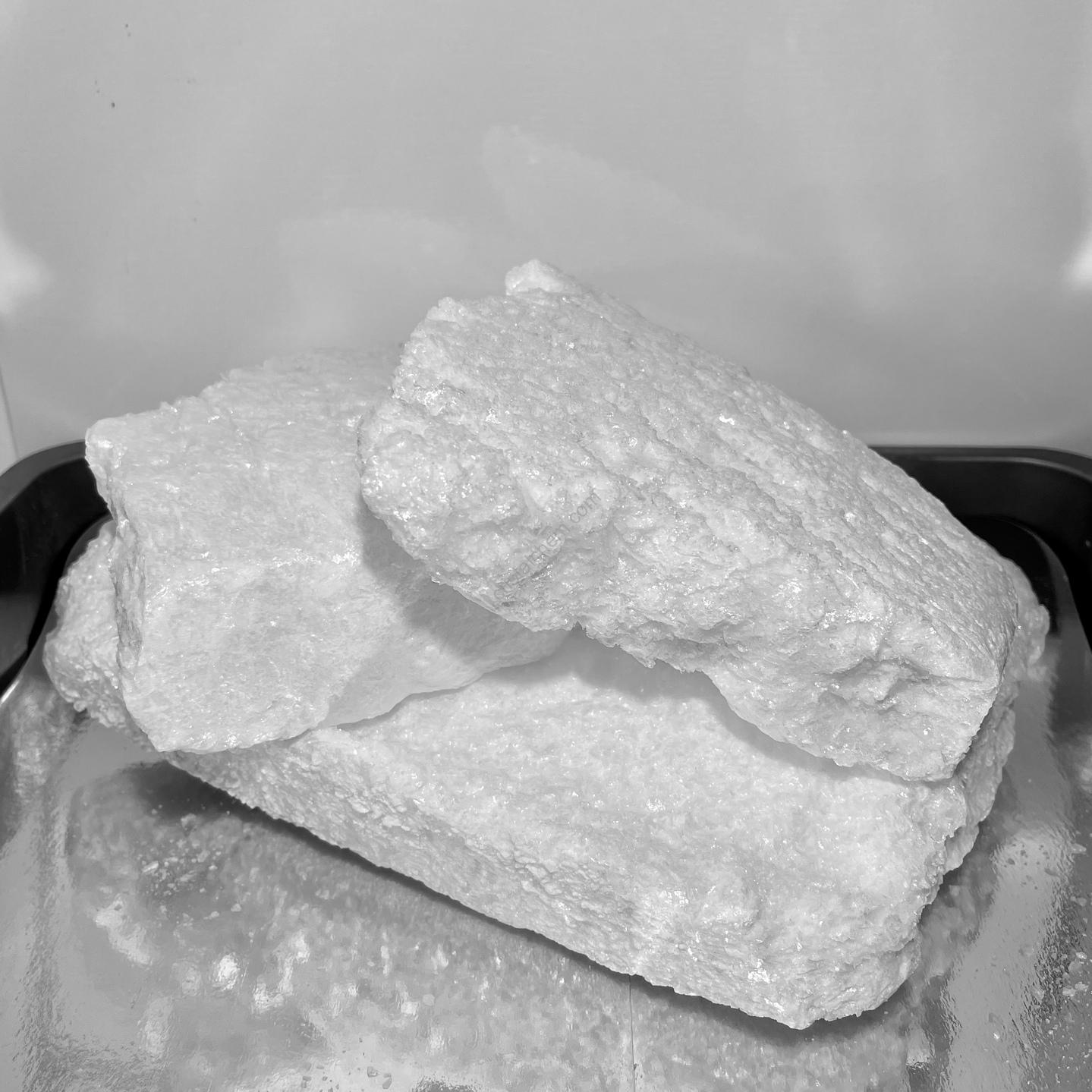
Boric Acid Crystal – Purity 100%
Boric acid is a white, solid chemical compound that has low solubility in water and is considered a weak acid.
Boric acid combats pests such as cockroaches, ants, and termites. The properties of boric acid make it act as a poison, destroying the digestive system of pests.
In aqueous solutions, boric acid exhibits antiseptic, drying, and astringent properties. It is beneficial in the wound healing process as it supports tissue regeneration and skin reconstruction.
Diluted boric acid solution is a preparation used in medical treatment. It is an active ingredient in foot powders for addressing foot perspiration issues and wound care products.
FOR LAB R&D USE ONLY!
| Parameter | Value / Description |
|---|---|
| Chemical formula | H₃BO₃ |
| Molar mass | 61.83 g/mol |
| Form | Crystalline solid |
| Color | White |
| Odor | Odorless |
| pH (1% solution) | 5.2 |
| Melting point | 169 °C |
| Boiling point | 300 °C |
| Specific gravity | 1.435 (water = 1) |
| Solubility in water | 57 g/L at 20 °C |
H317: May cause an allergic skin reaction.
H302: Harmful if swallowed.
P302 + P352: If on skin: wash with plenty of water and soap.
P280: Wear protective gloves, clothing, and eye/face protection.
Storage: Keep tightly sealed in a dry, cool place, protected from sunlight.
📄 Consult the Material Safety Data Sheet (MSDS) for full handling information.
ℹ️ This information is for scientific and research purposes only. The product is intended for professional laboratory use.
Boric acid (H₃BO₃) is a weak inorganic acid known for its versatility and stability.
It is white, odorless, and crystalline, which makes it easy to handle in laboratory and industrial settings.
Moreover, it acts as an antiseptic, preservative, and flame retardant, giving it value across multiple fields.
Boric acid is a key ingredient in many industrial processes.
In the glass and ceramics industry, it lowers the melting point and improves resistance to heat and acids.
In paints and varnishes, it enhances durability and stability.
Furthermore, in cosmetics and pharmaceuticals, it functions as a mild antiseptic and pH regulator.
It also plays a major role in the nuclear industry as a neutron absorber, helping control chain reactions.
In addition, boric acid supports fertilizer production, ensuring proper plant nutrition.
Therefore, it remains an important raw material in modern chemical technology.
Because of its antiseptic and antifungal properties, boric acid has long been used in eye washes and dermatological treatments.
In cosmetics, it prevents product spoilage and improves formulation stability.
For example, it appears in creams, powders, and lotions that require mild preservation and pH balance.
Boric acid is also practical in daily life. It helps maintain cleanliness and protect against pests.
Dissolve 1 teaspoon of boric acid in a cup of warm water.
Next, wipe the affected surface and rinse after a few minutes.
This simple method effectively removes mold and helps prevent regrowth.
Mix 1 teaspoon per liter of warm water, pour it into a spray bottle, and clean countertops or tiles.
After cleaning, rinse thoroughly to avoid residue.
Boric acid is a natural and effective way to eliminate ants.
Combine it with sugar or syrup to make bait.
Ants carry the mixture back to their nests, spreading it through the colony.
However, always use it with caution to prevent contamination of food or pet areas.
In laboratories, boric acid serves as a reference reagent and buffering compound.
It stabilizes chemical solutions and helps prevent microbial contamination.
Moreover, scientists use it in spectroscopy, titration, and electrochemical analysis.
As a result, it remains a valuable tool in R&D, analytical chemistry, and environmental studies.
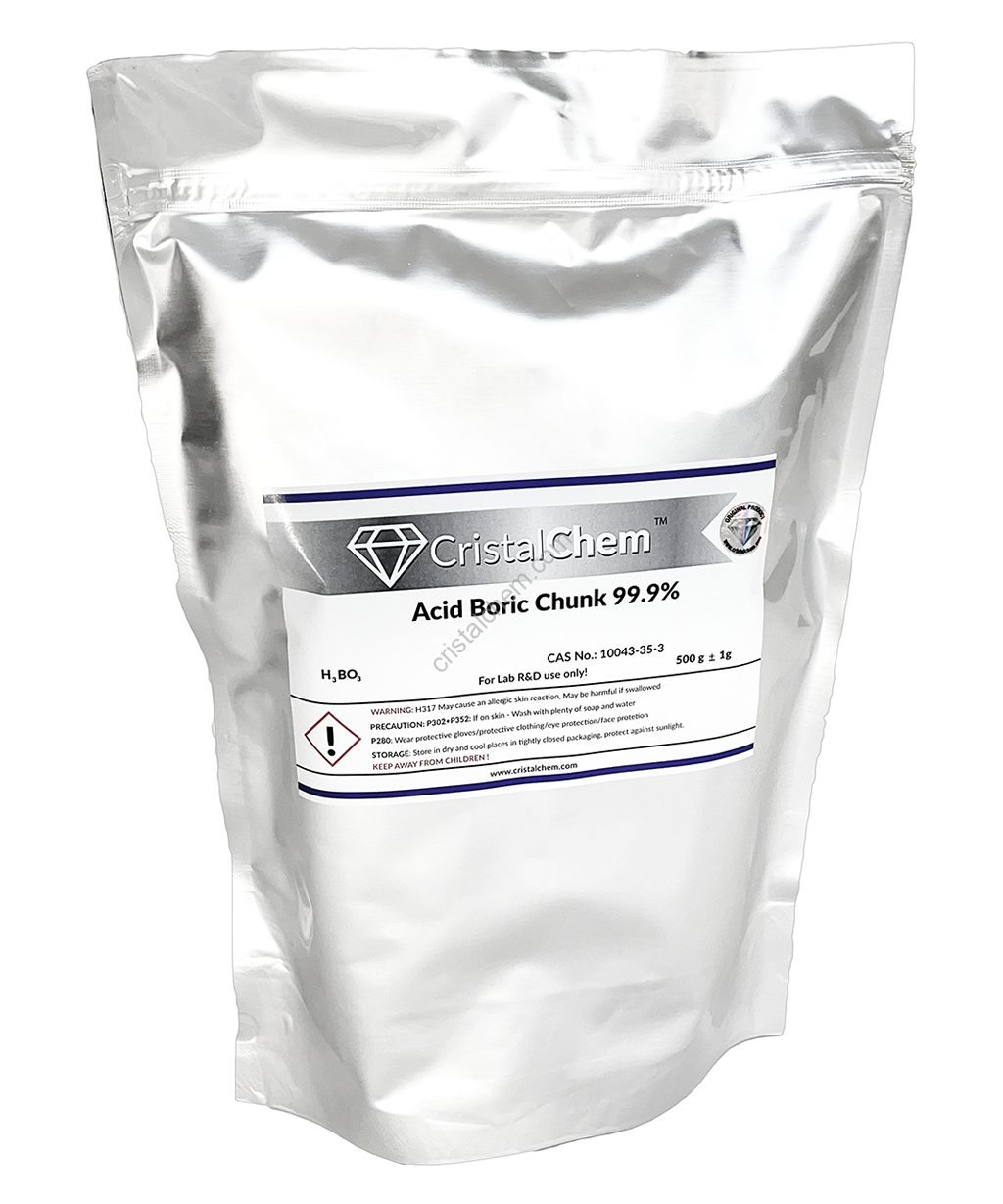
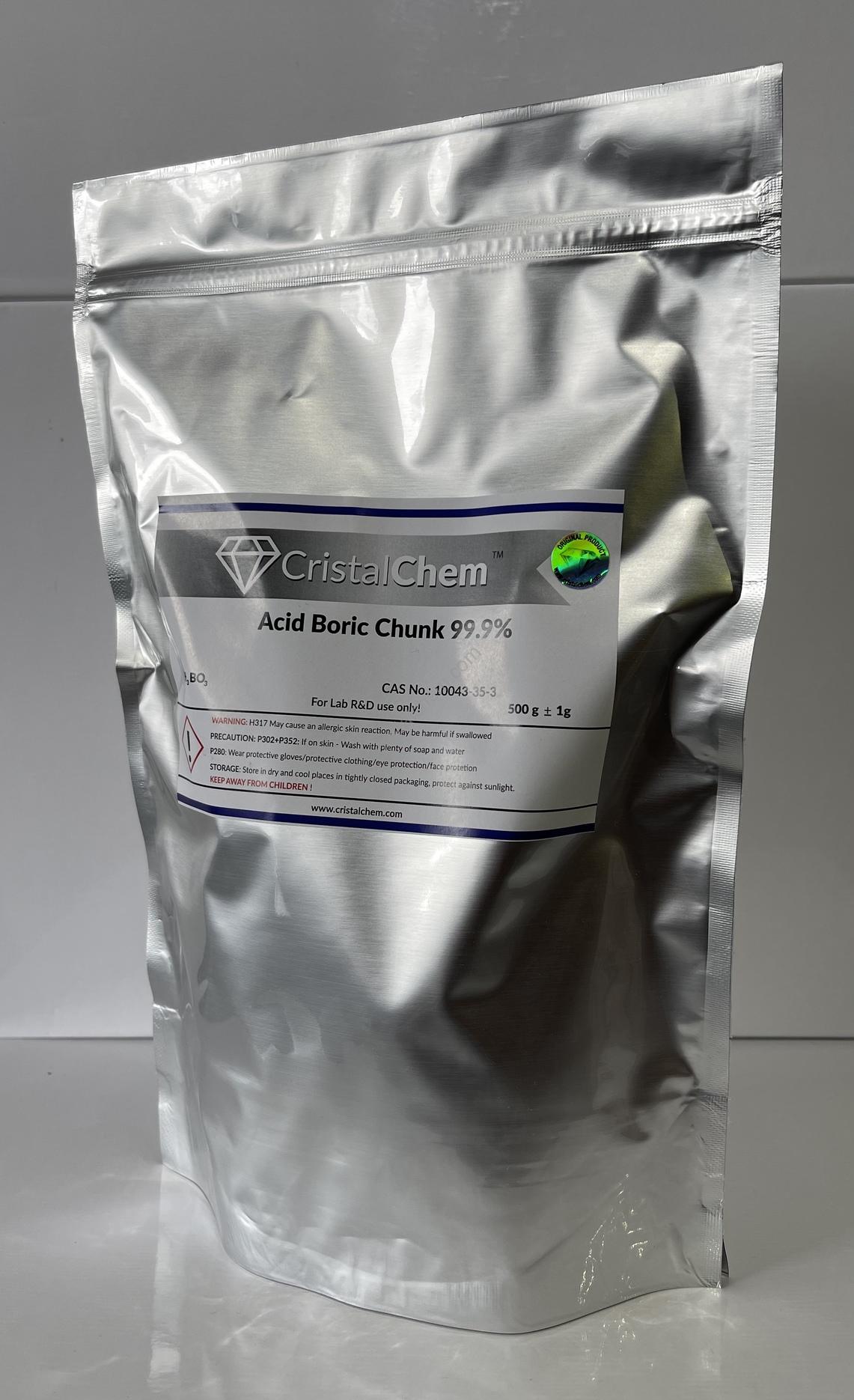
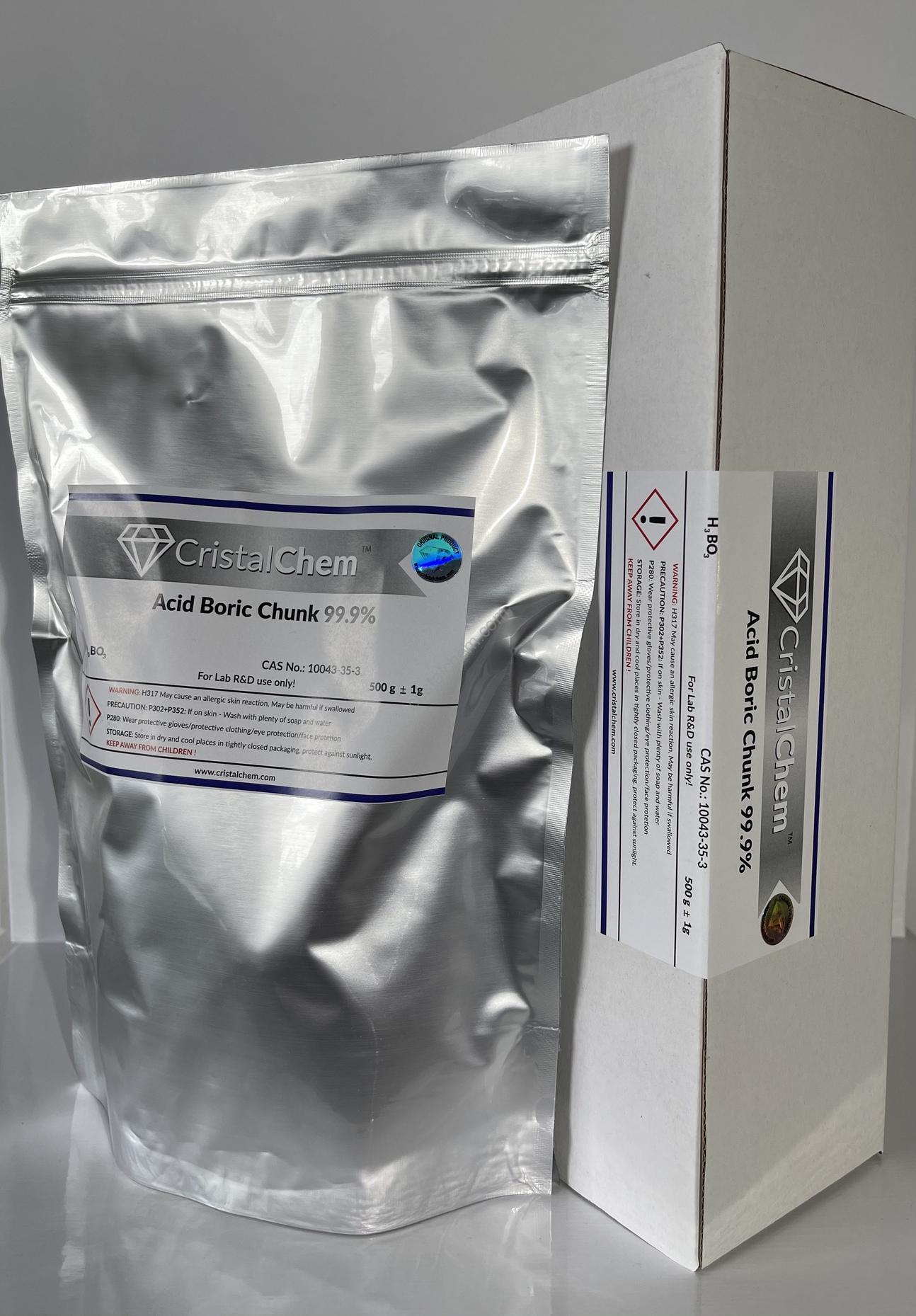
At CristalChem.com, we offer high-purity boric acid (H₃BO₃), tested for consistency and quality.
Each batch is packed in aluminum doypack bags that protect it from moisture and degradation.
We supply laboratories and industries in England, Ireland, Scotland, Canada, Australia, Spain, New Zealand, Latvia, Sweden, Germany, Belgium, France, and the Netherlands, as well as worldwide.
Because of our fast delivery, verified sourcing, and professional service, CristalChem is a trusted partner for scientists, R&D professionals, and industrial clients.
For laboratory and R&D use only. Not for human or veterinary use.
| Weight | 1.5 kg |
|---|
| Cookie | Duration | Description |
|---|---|---|
| cookielawinfo-checkbox-advertisement | 1 year | Set by the GDPR Cookie Consent plugin, this cookie records the user consent for the cookies in the "Advertisement" category. |
| cookielawinfo-checkbox-analytics | 1 year | Set by the GDPR Cookie Consent plugin, this cookie records the user consent for the cookies in the "Analytics" category. |
| cookielawinfo-checkbox-functional | 1 year | The GDPR Cookie Consent plugin sets the cookie to record the user consent for the cookies in the category "Functional". |
| cookielawinfo-checkbox-necessary | 1 year | Set by the GDPR Cookie Consent plugin, this cookie records the user consent for the cookies in the "Necessary" category. |
| cookielawinfo-checkbox-non-necessary | 1 year | GDPR Cookie Consent plugin sets this cookie to record the user consent for the cookies in the "Necessary" category. |
| cookielawinfo-checkbox-others | 1 year | Set by the GDPR Cookie Consent plugin, this cookie stores user consent for cookies in the category "Others". |
| cookielawinfo-checkbox-performance | 1 year | Set by the GDPR Cookie Consent plugin, this cookie stores the user consent for cookies in the category "Performance". |
| CookieLawInfoConsent | 1 year | CookieYes sets this cookie to record the default button state of the corresponding category and the status of CCPA. It works only in coordination with the primary cookie. |
| elementor | never | The website's WordPress theme uses this cookie. It allows the website owner to implement or change the website's content in real-time. |
| Cookie | Duration | Description |
|---|---|---|
| mailchimp_landing_site | 1 month | MailChimp sets the cookie to record which page the user first visited. |
| pll_language | 1 year | Polylang sets this cookie to remember the language the user selects when returning to the website and get the language information when unavailable in another way. |
| Cookie | Duration | Description |
|---|---|---|
| _gat | 1 minute | Google Universal Analytics sets this cookie to restrain request rate and thus limit data collection on high-traffic sites. |
| Cookie | Duration | Description |
|---|---|---|
| _ga | 1 year 1 month 4 days | Google Analytics sets this cookie to calculate visitor, session and campaign data and track site usage for the site's analytics report. The cookie stores information anonymously and assigns a randomly generated number to recognise unique visitors. |
| _ga_* | 1 year 1 month 4 days | Google Analytics sets this cookie to store and count page views. |
| _gcl_au | 3 months | Google Tag Manager sets the cookie to experiment advertisement efficiency of websites using their services. |
| _gid | 1 day | Google Analytics sets this cookie to store information on how visitors use a website while also creating an analytics report of the website's performance. Some of the collected data includes the number of visitors, their source, and the pages they visit anonymously. |
| Cookie | Duration | Description |
|---|---|---|
| IDE | 1 year 24 days | Google DoubleClick IDE cookies store information about how the user uses the website to present them with relevant ads according to the user profile. |
| test_cookie | 15 minutes | doubleclick.net sets this cookie to determine if the user's browser supports cookies. |
| Cookie | Duration | Description |
|---|---|---|
| cookies.js | session | No description available. |
| woocommerce_recently_viewed | session | WooCommerce sets this cookie to store performed actions on the website. |