
USD




$2,021.66 Original price was: $2,021.66.$1,750.77Current price is: $1,750.77.
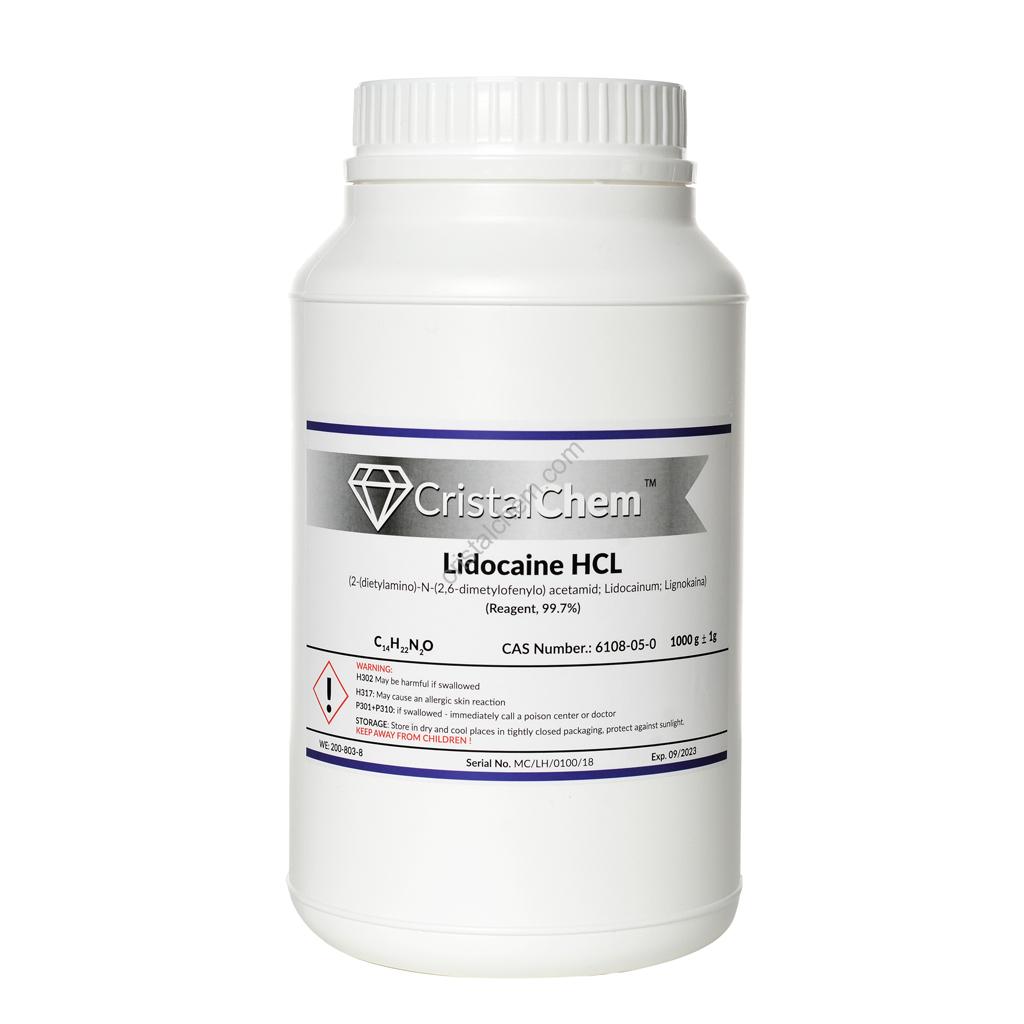
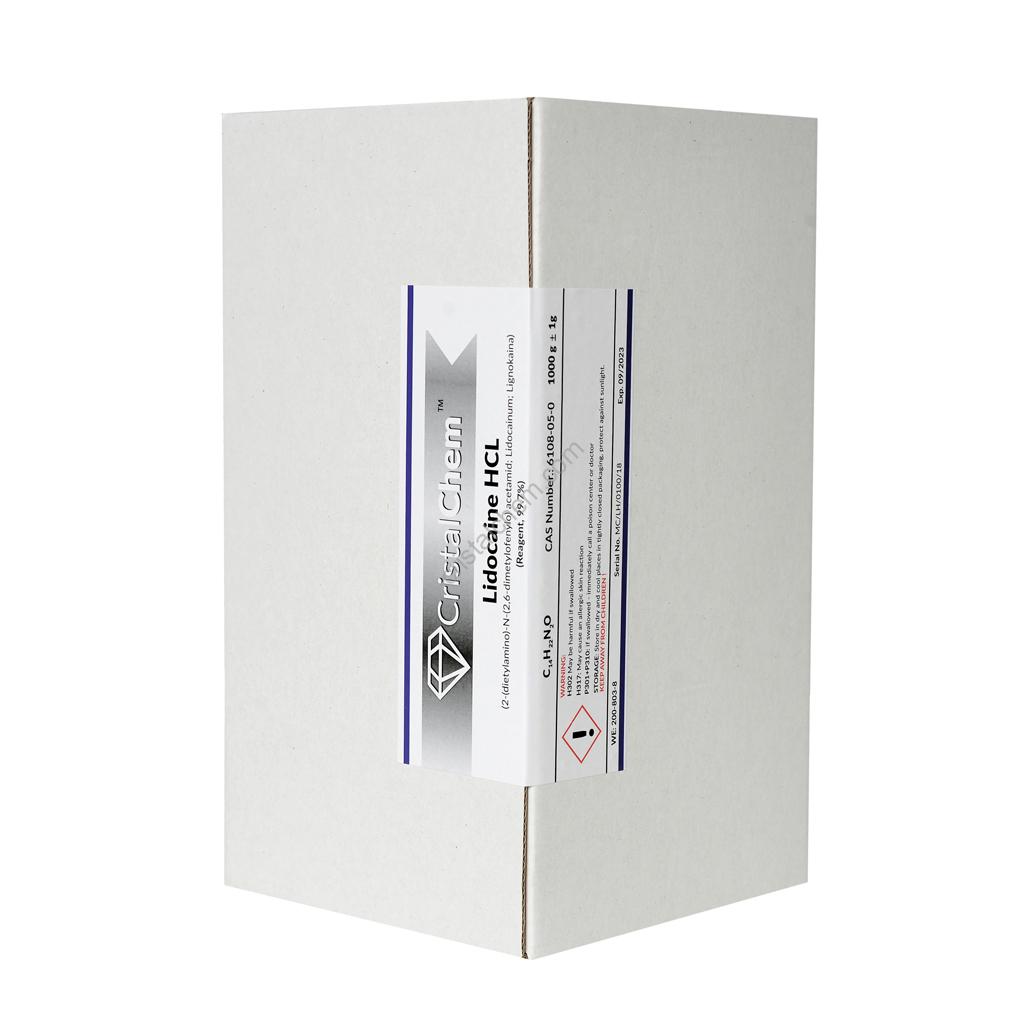
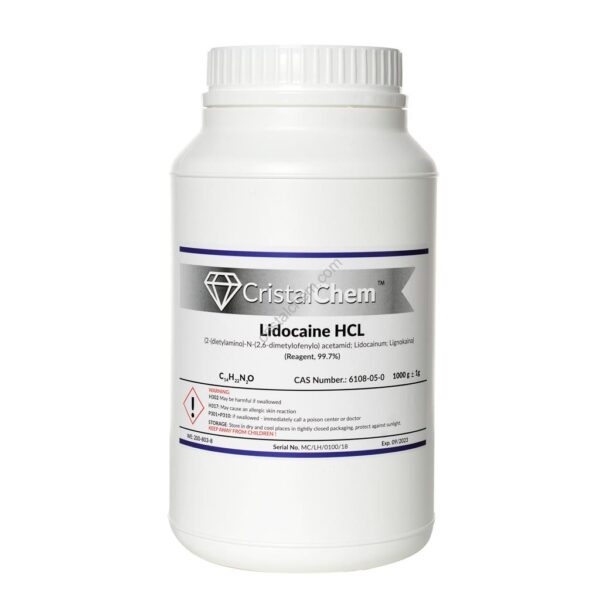
• Packaging: HDPE plastic bottle
• Weight: 5 x 1000g
• Safety: Product tightly packaged
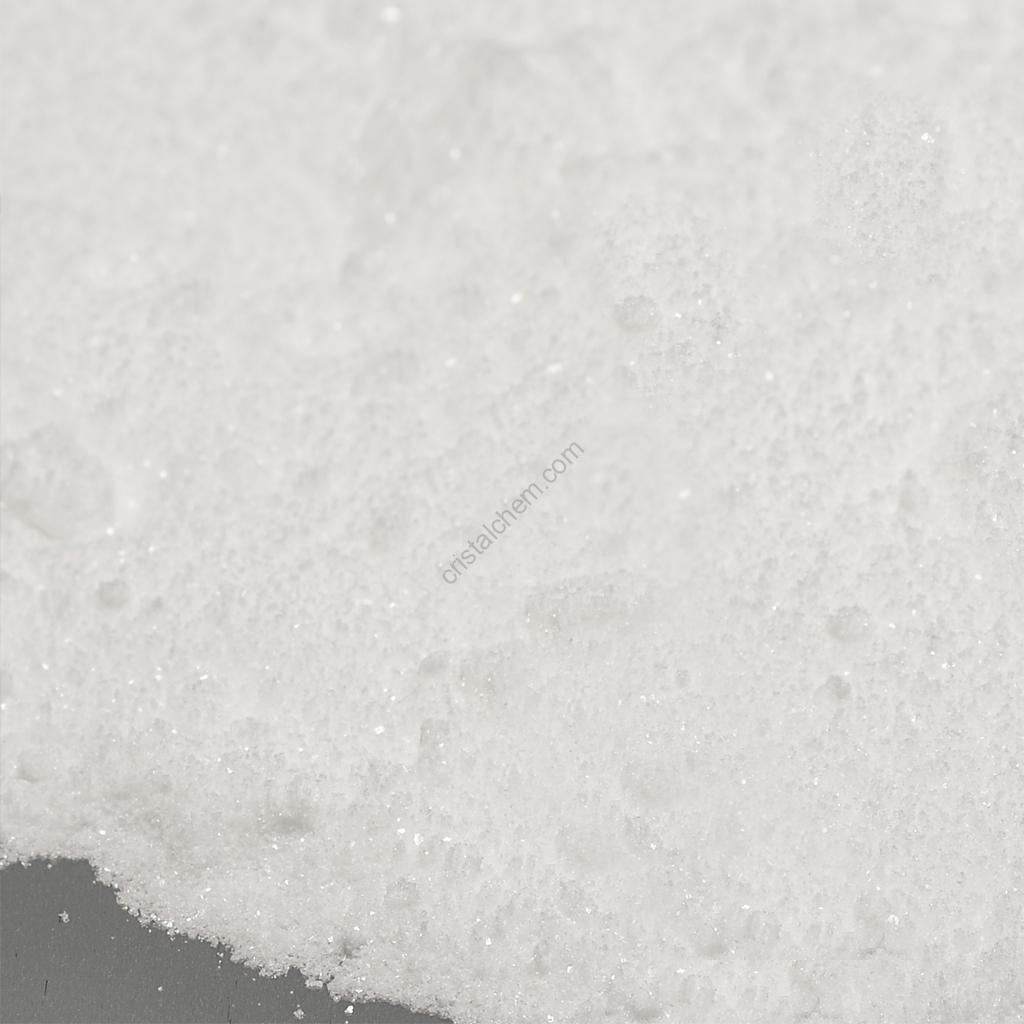
• Form: White powder
• CAS Number: 6108-05-0
• EC Number: 200-803-8
• Type: Certified Product
• Product: Organic chemical compound for professional use.
Lidocaine is an organic chemical compound that belongs to the group of local anesthetics. Its effectiveness in pain relief and fast-acting properties make it one of the most commonly used local anesthetics.
FOR LAB R&D USE ONLY!
Form: Solid
Chemical Formula: C₁₄H₂₂N₂O
Color: White
Odor: Odorless
Molar Mass: 288.8 g/mol
pH: 4.5–5 (in water, 5g/L at 20°C)
H302: Harmful if swallowed — rinse mouth and drink plenty of water.
P264: Wash thoroughly after handling.
P270: Do not eat, drink, or smoke while handling the product.
P301+P312: If swallowed: contact a poison center or doctor if you feel unwell.
P330: Rinse mouth.
P501: Dispose of contents/container in accordance with regulations.
Storage: Keep in a dry, cool place, tightly sealed, and away from sunlight.
All information below is intended for research and scientific purposes. The product is for professional laboratory use only.
Lidocaine HCl is an amide-type local anesthetic widely used in research and laboratory testing. Because of its clear mechanism of action, stability, and reproducible results, it remains one of the most studied compounds in both academic and industrial R&D.
Researchers study lidocaine to understand nerve conduction, pain transmission, and anesthetic mechanisms. Its properties also make it suitable for developing new anesthetic analogs and studying molecular interactions at sodium channels.
Lidocaine works by blocking sodium channels located in nerve cell membranes. As a result, it prevents the inflow of sodium ions and stops depolarization of the membrane.
Consequently, the nerve cannot transmit impulses to the brain, which leads to temporary loss of sensation and reduced pain perception.
This process occurs locally, in the specific area of application, and the effect usually lasts between 30 and 60 minutes, depending on dosage and surface contact.
Because of its precise action, researchers use lidocaine in experiments involving neural signaling, anesthetic modeling,and molecular pharmacology.
Lidocaine HCl is essential in several research areas:
Anesthesiology: modeling of local anesthetic behavior,
Dentistry and oral research: studies of topical pain relief and nerve desensitization,
Pharmacology: analysis of sodium-channel blockade,
Toxicology: exploration of metabolism and systemic effects,
Biotechnology: development of nerve signal studies and bioactive formulations.
In each of these fields, lidocaine helps scientists better understand how the body processes anesthetic molecules and how nerve function can be regulated.
Lidocaine spray provides a fast and direct way to deliver local anesthetic action. Researchers studying aerosol delivery systems often use spray formulations to test diffusion and onset of effect.
When applied in laboratory conditions, the vaporized compound interacts quickly with tissue models or test membranes.
This helps scientists evaluate bioavailability, penetration speed, and local stability of anesthetic compounds.
Lidocaine gels are used to study surface anesthesia and absorption kinetics. When applied to the skin or mucous membranes, they provide temporary numbing.
Researchers monitor onset time, duration, and concentration dependence to evaluate the compound’s effectiveness.
Moreover, gels are convenient for experiments that analyze pain models, dermatological absorption, and diffusion through biological membranes.
Typically, the anesthetic effect lasts 30–60 minutes, depending on dose and exposure surface.
Always use personal protective equipment (PPE) when working with lidocaine HCl.
Avoid contact with eyes or skin and prevent inhalation of dust or vapors.
Store securely in a dry, cool, and well-ventilated space.
Following standard safety rules ensures consistent experimental results and product stability.
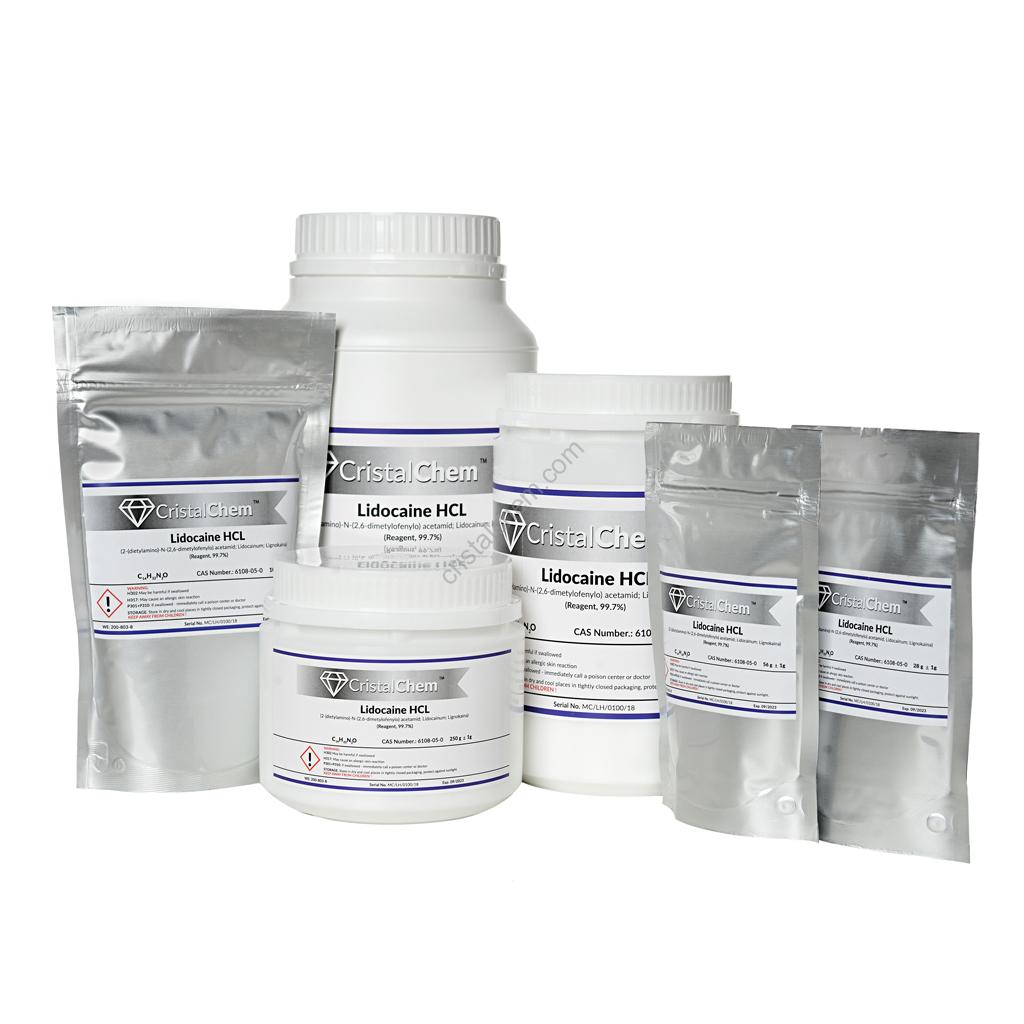
At CristalChem.com, researchers can order Lidocaine HCl (CAS 73-78-9) of certified high purity, packed in aluminum doypack bags that protect against light and humidity.
Each batch comes from verified suppliers and meets strict quality standards for laboratory and R&D use.
We deliver to laboratories, universities, and research institutions across England, Ireland, Scotland, Canada, Australia, Spain, New Zealand, Latvia, Sweden, Germany, Belgium, France, and the Netherlands — and worldwide.
Because of our reliable logistics and professional service, CristalChem is recognized as a trusted supplier of chemical reagents for research and development globally.
For laboratory and R&D use only. Not for human or veterinary use.
| Weight | 5 kg |
|---|
| Cookie | Duration | Description |
|---|---|---|
| cookielawinfo-checkbox-advertisement | 1 year | Set by the GDPR Cookie Consent plugin, this cookie records the user consent for the cookies in the "Advertisement" category. |
| cookielawinfo-checkbox-analytics | 1 year | Set by the GDPR Cookie Consent plugin, this cookie records the user consent for the cookies in the "Analytics" category. |
| cookielawinfo-checkbox-functional | 1 year | The GDPR Cookie Consent plugin sets the cookie to record the user consent for the cookies in the category "Functional". |
| cookielawinfo-checkbox-necessary | 1 year | Set by the GDPR Cookie Consent plugin, this cookie records the user consent for the cookies in the "Necessary" category. |
| cookielawinfo-checkbox-non-necessary | 1 year | GDPR Cookie Consent plugin sets this cookie to record the user consent for the cookies in the "Necessary" category. |
| cookielawinfo-checkbox-others | 1 year | Set by the GDPR Cookie Consent plugin, this cookie stores user consent for cookies in the category "Others". |
| cookielawinfo-checkbox-performance | 1 year | Set by the GDPR Cookie Consent plugin, this cookie stores the user consent for cookies in the category "Performance". |
| CookieLawInfoConsent | 1 year | CookieYes sets this cookie to record the default button state of the corresponding category and the status of CCPA. It works only in coordination with the primary cookie. |
| elementor | never | The website's WordPress theme uses this cookie. It allows the website owner to implement or change the website's content in real-time. |
| Cookie | Duration | Description |
|---|---|---|
| mailchimp_landing_site | 1 month | MailChimp sets the cookie to record which page the user first visited. |
| pll_language | 1 year | Polylang sets this cookie to remember the language the user selects when returning to the website and get the language information when unavailable in another way. |
| Cookie | Duration | Description |
|---|---|---|
| _gat | 1 minute | Google Universal Analytics sets this cookie to restrain request rate and thus limit data collection on high-traffic sites. |
| Cookie | Duration | Description |
|---|---|---|
| _ga | 1 year 1 month 4 days | Google Analytics sets this cookie to calculate visitor, session and campaign data and track site usage for the site's analytics report. The cookie stores information anonymously and assigns a randomly generated number to recognise unique visitors. |
| _ga_* | 1 year 1 month 4 days | Google Analytics sets this cookie to store and count page views. |
| _gcl_au | 3 months | Google Tag Manager sets the cookie to experiment advertisement efficiency of websites using their services. |
| _gid | 1 day | Google Analytics sets this cookie to store information on how visitors use a website while also creating an analytics report of the website's performance. Some of the collected data includes the number of visitors, their source, and the pages they visit anonymously. |
| Cookie | Duration | Description |
|---|---|---|
| IDE | 1 year 24 days | Google DoubleClick IDE cookies store information about how the user uses the website to present them with relevant ads according to the user profile. |
| test_cookie | 15 minutes | doubleclick.net sets this cookie to determine if the user's browser supports cookies. |
| Cookie | Duration | Description |
|---|---|---|
| cookies.js | session | No description available. |
| woocommerce_recently_viewed | session | WooCommerce sets this cookie to store performed actions on the website. |