Description
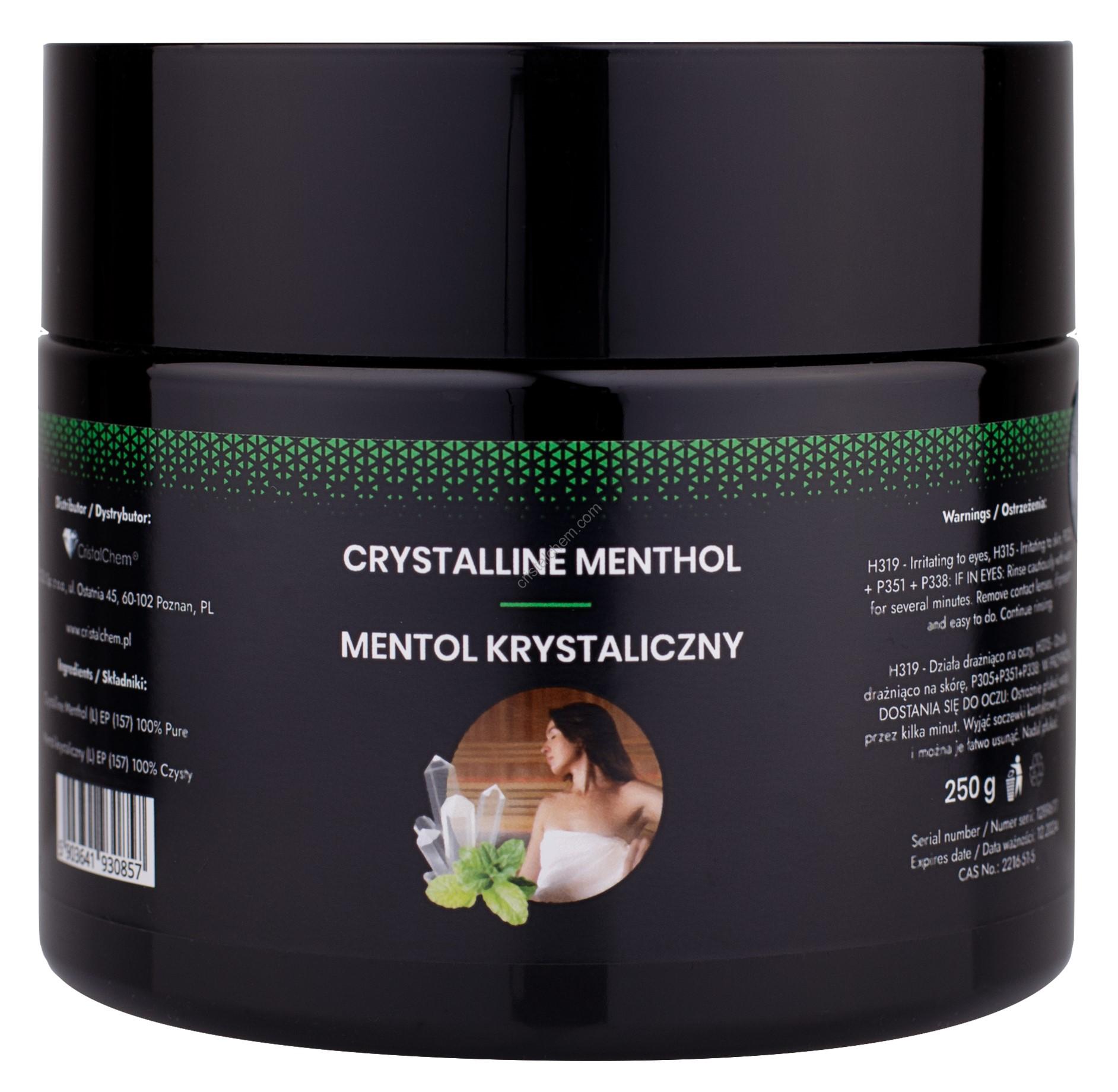
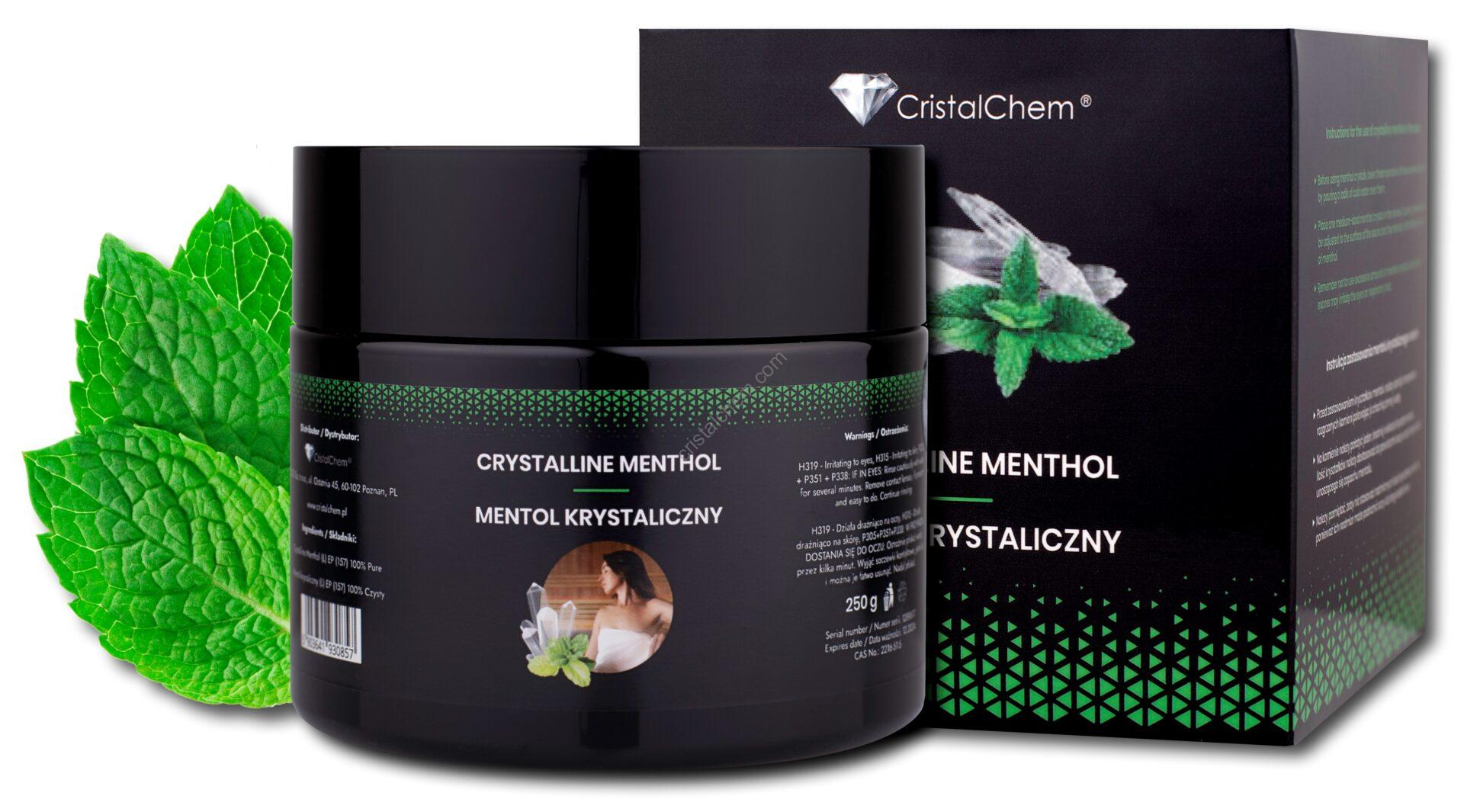
❄️ Menthol Crystals – Pure Crystalline For Sauna
⚗️ Physical and Chemical Properties of Menthol
| Parameter |
Value / Description |
| Form |
Solid crystalline flakes or needles |
| Color |
Colorless to white |
| Odor |
Strong mint aroma |
| Chemical formula |
C₁₀H₂₀O |
| Molar mass |
156.27 g/mol |
| Melting point |
41–44 °C |
| Boiling point |
212 °C |
| Solubility in water |
Slightly soluble |
| Solubility in organic solvents |
Freely soluble in ethanol, ether, and chloroform |
⚠️ Warnings
-
H319: Causes serious eye irritation.
-
H315: Causes skin irritation.
-
P305 + P351 + P338: If in eyes, rinse carefully with water for several minutes. Remove contact lenses if possible, then continue rinsing.
Storage: Store the container tightly closed in a dry, cool place. Protect it from sunlight. Keep away from children.
ℹ️ This information is for scientific, educational, and research purposes. The product is intended for professional laboratory use only.
🌿 What Are Menthol Crystals?
Menthol crystals belong to the terpenoid alcohol group and stand out for their sharp mint scent and transparent crystalline form.
They naturally occur in peppermint and cornmint oils, and they are valued for their refreshing and cooling qualities.
Although menthol often appears in aromatherapy, it also enriches sauna experiences, providing both relaxation and invigoration.
🔥 How to Use Menthol Crystals
The simplest way to use menthol crystals in the sauna is to mix a small amount with water.
Next, pour the solution over hot stones to release the crisp mint aroma.
Consequently, the steam spreads quickly, filling the air with a cooling and energizing scent.
Moreover, menthol crystals transform every sauna session into a more stimulating experience.
They promote relaxation, refresh breathing, and enhance focus.
🌱 Where Do Menthol Crystals Come From?
Also known as crystallized mint, menthol originates from natural essential oils of peppermint (Mentha piperita) and other mint plants.
Producers extract it directly from the oils and then purify it by controlled crystallization.
As a result, menthol keeps its natural fragrance and high chemical purity.
⚗️ The Crystallization Process
The process begins with peppermint oil, which contains between 30% and 50% menthol.
Through fractional distillation, manufacturers separate menthol from other components.
Then they cool the purified liquid, allowing needle-like crystals to form.
This step ensures excellent purity and stability, making menthol suitable for research and product development.
💎 Common Applications of Menthol
Menthol crystals have many uses in research and production. For example:
-
Cosmetics: Added to creams, balms, shampoos, and gels for cooling and refreshing effects.
-
Saunas and spas: Provide a clean, invigorating aroma without affecting body temperature.
-
Aromatization: Used in detergents, tissues, air fresheners, and car fragrances.
-
Aromatherapy: Support focus, relaxation, and improved mood.
In addition, researchers often test menthol in R&D environments because of its stable structure and reproducible physical properties.
It blends easily with other essential oils, allowing scientists to create new aromatic formulations.
✨ CristalChem supplies certified menthol crystals for laboratory and professional use.
Each batch undergoes purity testing and is packaged in aluminum doypack bags to ensure long-lasting freshness and stability.
For laboratory and R&D use only. Not for human or veterinary use.