
USD



$134.76
Procaine HCL Fluffy
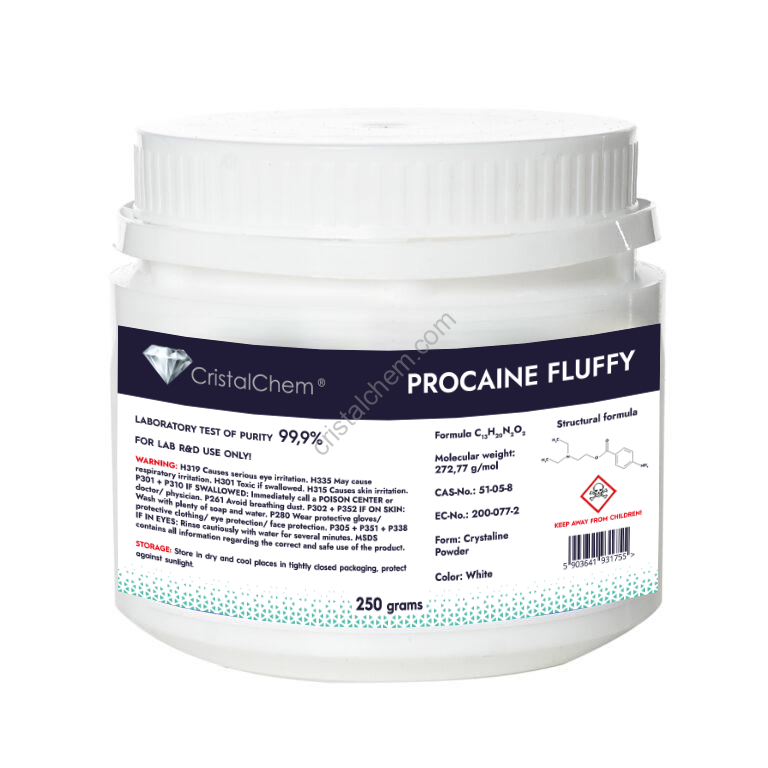
Packaging: White HDPE pharmacy jar.
Weight: 250g
Safety: The product is tightly packed
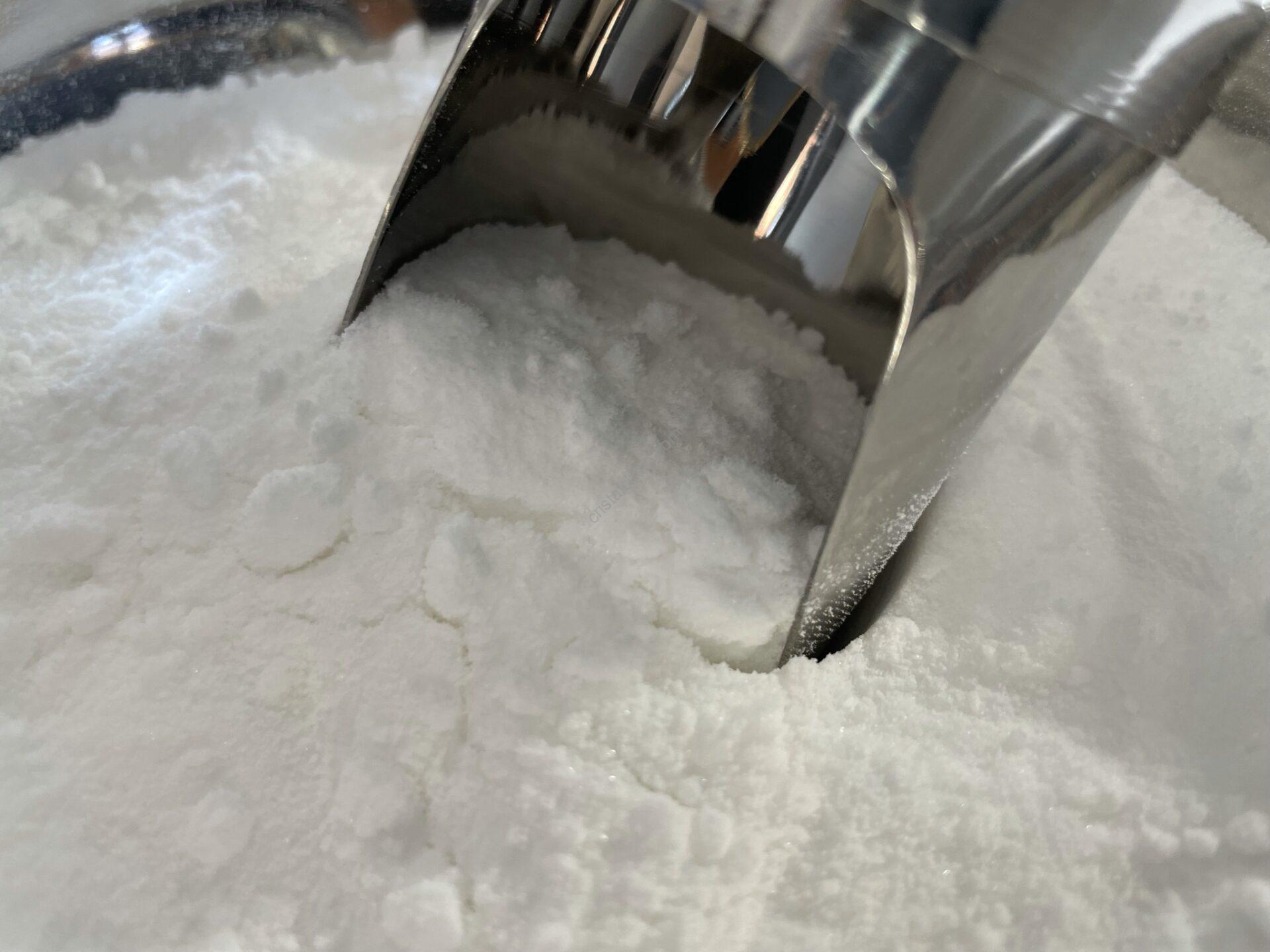
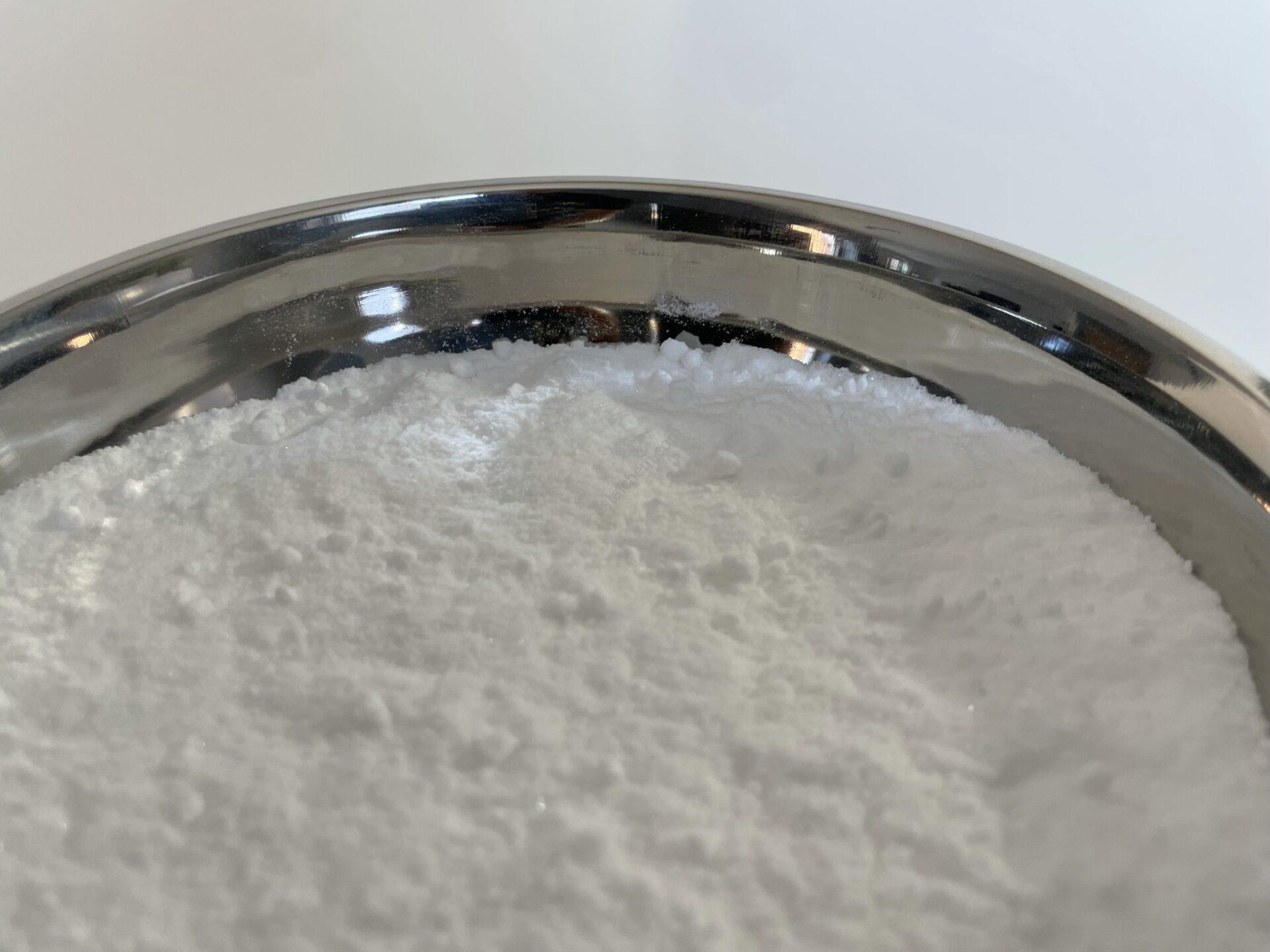
Appearance: White powder
CAS No.: 51-05-8
EC No.: 200-077-2
Type: Certified Product
Product: Organic chemical compound for professional use.
Procaine HCL is a synthetic chemical compound from the group of local anesthetics, which is used in medicine for local anesthesia and pain control.
Procaine occurs as a white or almost white crystalline powder or colorless crystals that are easily soluble in water and 96% ethanol.
Procaine HCL acts at the site of application, where it slows down or blocks the conduction of nerve impulses, leading to loss of sensation and numbness in this area. This compound increases the threshold of electrical excitation, reduces the rate of rise of the action potential and slows down the propagation of the nerve impulse, thus causing loss of sensation at the site of application.
| Parameter | Value / Description |
|---|---|
| Chemical formula | C₁₃H₂₀N₂O₂ |
| CAS number | 51-05-8 |
| EC number | 200-077-2 |
| Molecular weight | 272.77 g/mol |
| Form | Crystalline powder |
| Color | White |
| Odor | Odorless |
H319: Causes serious eye irritation.
H335: May cause respiratory irritation.
H301: Toxic if swallowed.
H315: Causes skin irritation.
P301 + P310: If swallowed: immediately call a POISON CENTER or doctor.
P261: Avoid breathing dust.
P302 + P352: If on skin: wash with plenty of soap and water.
P305 + P351 + P338: If in eyes: rinse carefully with water for several minutes.
Storage: Keep in a cool, dry place, in tightly closed containers. Protect from sunlight. Keep away from children.
📄 Consult the MSDS for complete safety and handling information.
Procaine hydrochloride (Procaine HCL) is an ester of p-aminobenzoic acid and N,N-diethylaminoethanol. It belongs to the class of local anesthetics and is known for its ability to block nerve conduction, providing temporary loss of sensation in targeted areas.
Procaine acts by blocking voltage-gated sodium channels in the nerve cell membrane.
As a result, it prevents the influx of sodium ions, stopping the generation and transmission of nerve impulses.
Therefore, the area treated with procaine becomes desensitized, reducing or completely eliminating pain sensations.
In medical practice, Procaine HCL is used mainly for local, spinal, and infiltration anesthesia.
However, it is not suitable for surface anesthesia because it does not absorb well through mucous membranes.
Medical use
Procaine HCL is used to anesthetize the skin, mucous membranes, soft tissues, and joints during:
blood sampling and venipuncture,
mole or lesion removal,
dental fillings and root canal treatments,
minor surgical or dermatological procedures.
In analgesic therapy, procaine helps relieve rheumatic, muscular, and neuralgic pain as well as migraines.
When combined with benzylpenicillin, it reduces injection pain and extends the drug’s duration of action.
Veterinary use
Procaine is also used in veterinary medicine for anesthesia during minor animal procedures.
Scientific and analytical use
In laboratories, Procaine HCL functions as a chemical reagent in:
electrophoresis,
spectrophotometry,
chromatography,
helping detect compounds and validate analytical methods.
The effects of Procaine HCL depend on the dose and method of administration.
Typically, subcutaneous or local injection produces anesthesia lasting several dozen minutes.
Some users experience mild tingling, while others achieve complete numbness of the treated area.
Researchers continue to use Procaine HCL as a model compound in studies related to:
neural conduction,
ion channel pharmacology,
comparative anesthetic research.
Because of its well-documented mechanism, Procaine HCL remains a key reference reagent in medical chemistry, toxicology, and biophysics.
For laboratory and R&D use only. Not for human or veterinary administration.
| Weight | 0.25 kg |
|---|
| Cookie | Duration | Description |
|---|---|---|
| cookielawinfo-checkbox-advertisement | 1 year | Set by the GDPR Cookie Consent plugin, this cookie records the user consent for the cookies in the "Advertisement" category. |
| cookielawinfo-checkbox-analytics | 1 year | Set by the GDPR Cookie Consent plugin, this cookie records the user consent for the cookies in the "Analytics" category. |
| cookielawinfo-checkbox-functional | 1 year | The GDPR Cookie Consent plugin sets the cookie to record the user consent for the cookies in the category "Functional". |
| cookielawinfo-checkbox-necessary | 1 year | Set by the GDPR Cookie Consent plugin, this cookie records the user consent for the cookies in the "Necessary" category. |
| cookielawinfo-checkbox-non-necessary | 1 year | GDPR Cookie Consent plugin sets this cookie to record the user consent for the cookies in the "Necessary" category. |
| cookielawinfo-checkbox-others | 1 year | Set by the GDPR Cookie Consent plugin, this cookie stores user consent for cookies in the category "Others". |
| cookielawinfo-checkbox-performance | 1 year | Set by the GDPR Cookie Consent plugin, this cookie stores the user consent for cookies in the category "Performance". |
| CookieLawInfoConsent | 1 year | CookieYes sets this cookie to record the default button state of the corresponding category and the status of CCPA. It works only in coordination with the primary cookie. |
| elementor | never | The website's WordPress theme uses this cookie. It allows the website owner to implement or change the website's content in real-time. |
| Cookie | Duration | Description |
|---|---|---|
| mailchimp_landing_site | 1 month | MailChimp sets the cookie to record which page the user first visited. |
| pll_language | 1 year | Polylang sets this cookie to remember the language the user selects when returning to the website and get the language information when unavailable in another way. |
| Cookie | Duration | Description |
|---|---|---|
| _gat | 1 minute | Google Universal Analytics sets this cookie to restrain request rate and thus limit data collection on high-traffic sites. |
| Cookie | Duration | Description |
|---|---|---|
| _ga | 1 year 1 month 4 days | Google Analytics sets this cookie to calculate visitor, session and campaign data and track site usage for the site's analytics report. The cookie stores information anonymously and assigns a randomly generated number to recognise unique visitors. |
| _ga_* | 1 year 1 month 4 days | Google Analytics sets this cookie to store and count page views. |
| _gcl_au | 3 months | Google Tag Manager sets the cookie to experiment advertisement efficiency of websites using their services. |
| _gid | 1 day | Google Analytics sets this cookie to store information on how visitors use a website while also creating an analytics report of the website's performance. Some of the collected data includes the number of visitors, their source, and the pages they visit anonymously. |
| Cookie | Duration | Description |
|---|---|---|
| IDE | 1 year 24 days | Google DoubleClick IDE cookies store information about how the user uses the website to present them with relevant ads according to the user profile. |
| test_cookie | 15 minutes | doubleclick.net sets this cookie to determine if the user's browser supports cookies. |
| Cookie | Duration | Description |
|---|---|---|
| cookies.js | session | No description available. |
| woocommerce_recently_viewed | session | WooCommerce sets this cookie to store performed actions on the website. |