
EUR

Lidocaine HCl Crystalline Powder (CAS 6108-05-0) is a benchmark local anesthetic for modern R&D, pharma, tattoo, dental and dermo-aesthetic applications. The crystalline form ensures stability, precise handling and reproducible lab results. At CristalChem we provide high-purity Lidocaine HCl with safe worldwide delivery to teams across USA, Canada, UK, Ireland, Germany, France, Spain, Italy, Sweden, Estonia, Latvia, Romania, Bulgaria, the Netherlands, Australia, New Zealand, Mexico and beyond.
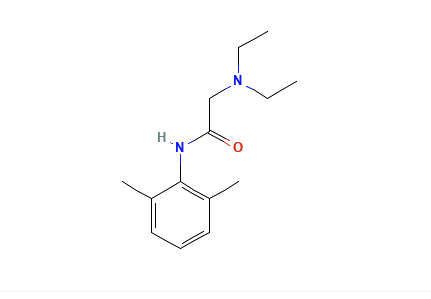
Molecular structure of Lidocaine HCl crystalline powder molecular structure CAS 6108-05-0 CristalChem.
Reference data: PubChem: lidocaine hydrochloride (search), NIST WebBook: lidocaine (entry), ChemSpider: CAS 6108-05-0 (search), ECHA CLP: lidocaine hydrochloride (search).
Compare with other anesthetic reagents from CristalChem: Benzocaine, Procaine, and cooling agents like Menthol. For general safety handling see our SDS Guide.
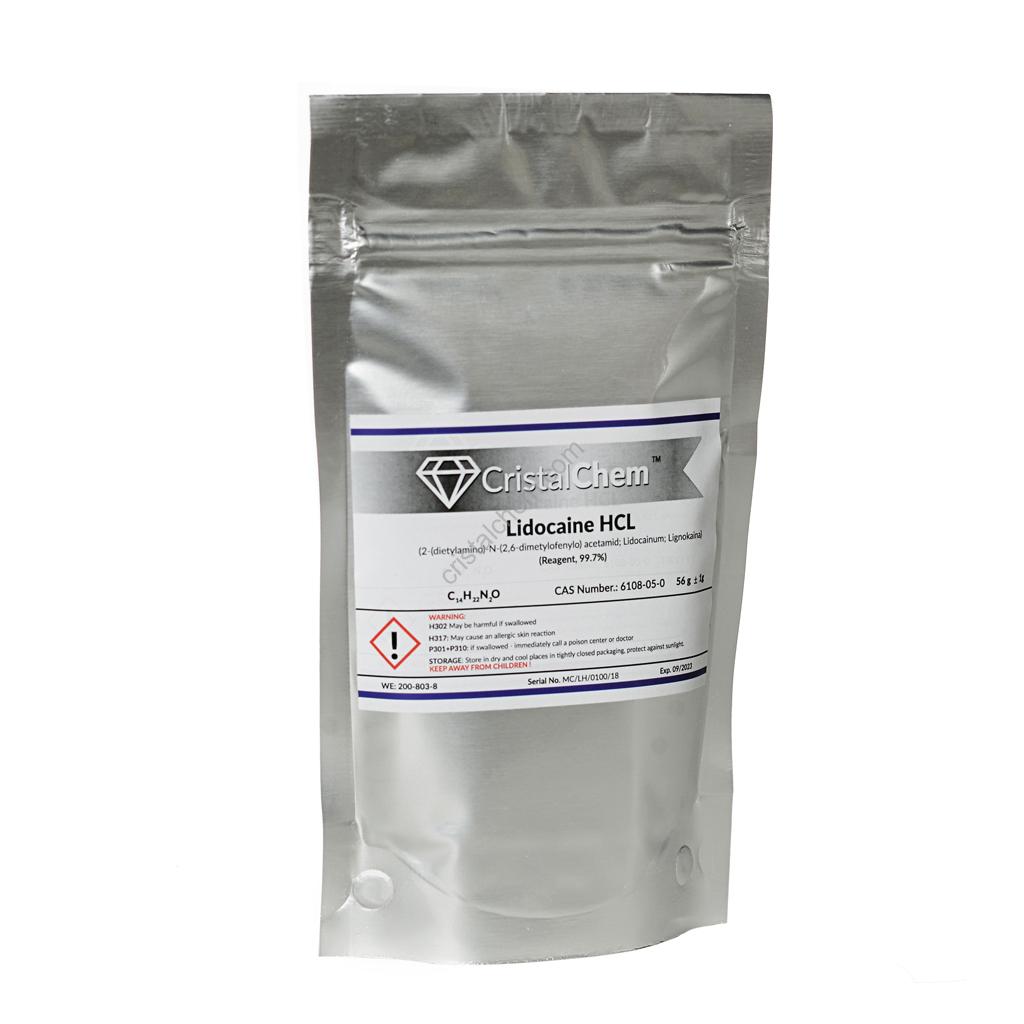
Laboratory vial & doypack with Lidocaine HCl crystalline powder CAS 6108-05-0 CristalChem
Studios in USA, UK, Germany, Spain, Canada and Australia rely on Lidocaine HCl Crystalline Powder to formulate pre-session numbing creams (4–5%), quick-acting sprays and soothing aftercare gels that increase client comfort and studio efficiency.
OTC topical products (2–4% lidocaine) are widely available in Germany, UK, Canada, USA. Regulatory status varies (OTC vs Rx-only). Always check ECHA CLP entry/search and local regulations (e.g., FDA search: lidocaine topical, EMA search: lidocaine).
Local anesthetics are on a steady growth trajectory. Market intelligence indicates rising demand driven by dermo-aesthetics, dental services, tattoo culture and OTC self-care. See: Verified Market Reports – local anesthetics (search), Statista – local anesthetics (search), ResearchAndMarkets – local anesthetics (search).
The procedures and examples below are for informational and educational purposes only. They are not production-ready instructions or medical advice. Experiments and prototyping should be carried out only by qualified professionals in properly equipped facilities, in compliance with local regulations. Quantities shown are illustrative prototypes. Before any commercial use, perform risk assessments, stability/tox tests and obtain required approvals (FDA/EMA/ECHA/local laws). CristalChem accepts no liability for misuse or accidents.
Objective: Compare solubility of Lidocaine HCl in water, ethanol (50–70%), and glycerol.
Outcome: Fastest dissolution in water; ethanol co-solvent enhances dermal delivery in topical prototypes.
Objective: Assess crystalline stability at 25/40/60 °C (dark vs light).
Outcome: Stable up to ~40 °C when protected from light/moisture; use amber vials and desiccants.
Objective: Quick topical prototype for R&D.
Method: Dissolve 2 g Lidocaine HCl in 50 ml ethanol + 50 ml purified water; filter (0.22 µm) into spray vial.
Note: For lab evaluation only; not a finished product.
Objective: Observe color/stability changes in lidocaine + epinephrine lab mix.
Tip: Protect from light; monitor oxidation.
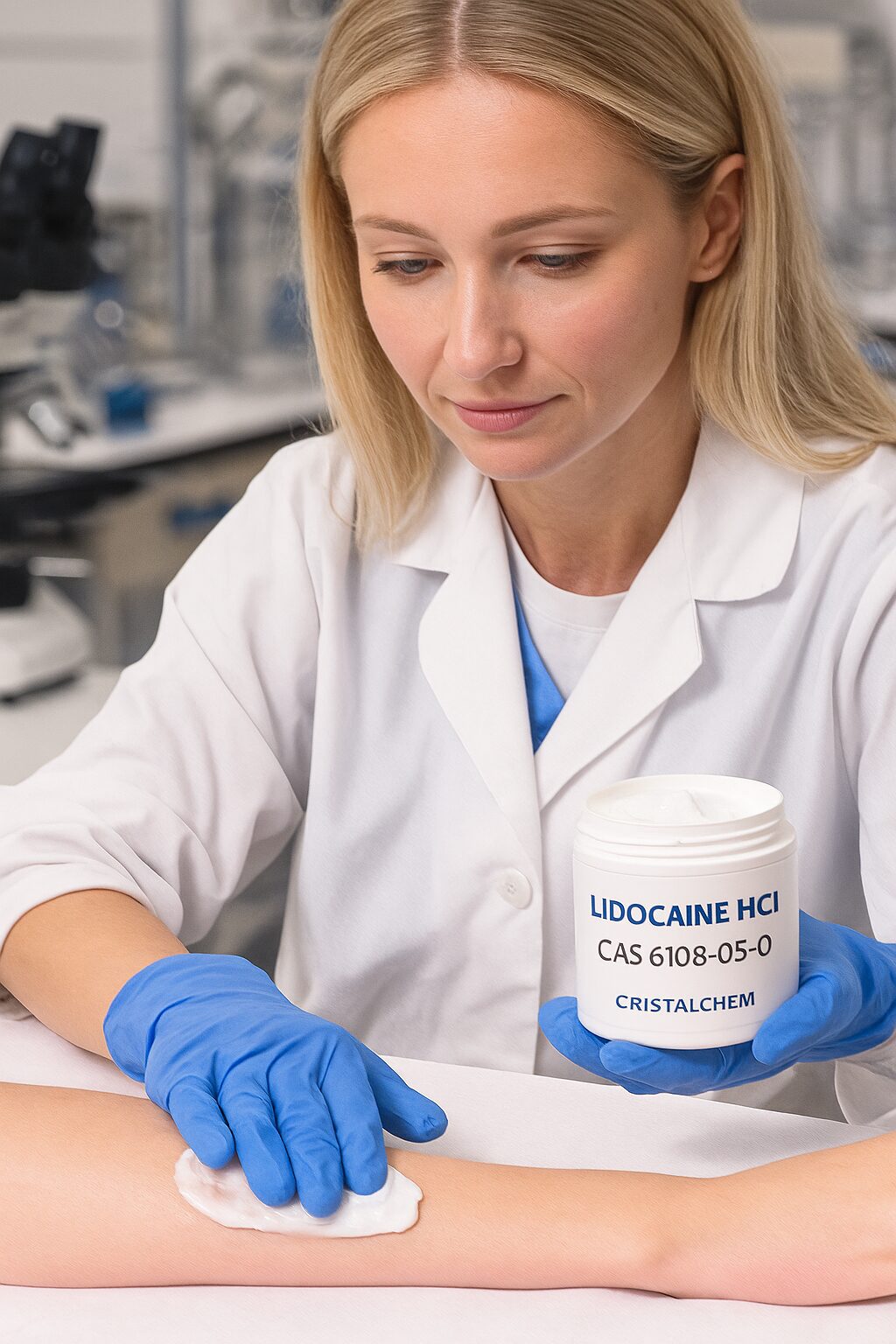
Dermatology lab applying anesthetic Lidocaine HCl anesthetic cream CAS 6108-05-0 CristalChem.
Demand spans pharma, aesthetics and tattoo markets. Brands can turn Lidocaine HCl Crystalline Powder into high-value OTC topicals (where allowed), clinic-use gels, or recovery kits. Market references: Verified Market Reports (search), Statista (search), ResearchAndMarkets (search), compound data at PubChem, NIST WebBook, ChemSpider.
Lidocaine HCl Crystalline Powder (CAS 6108-05-0) connects science with real-world outcomes across USA, Canada, UK, Ireland, Germany, France, Spain, Italy, Sweden, Estonia, Latvia, Romania, Bulgaria, Netherlands, Australia, New Zealand, Mexico. For labs and innovators seeking reliable quality with safe worldwide delivery, CristalChem is a trusted partner.
Disclaimer: This article is for informational and educational purposes only. It is not production or medical advice. All experiments must be conducted by qualified personnel under proper regulatory and safety standards. CristalChem disclaims liability for misuse or accidents.


Chemical Research Writer at CristalChem Academy. Passionate about chemistry, R&D, and turning laboratory insights into global wellness and industrial innovations.