
USD

Lidocaine Hydrochloride (Lidocaine HCl) remains one of the most essential anesthetic actives in modern formulations. Its cost structure, however, depends heavily on pack size, delivery route, and compliance status. Because these factors often shift from quarter to quarter, understanding their impact is key to stable planning.
In 2025 and 2026 manufacturers are facing new REACH and FDA auditing requirements that directly influence pricing and supply. Therefore, sourcing managers should evaluate not only nominal price per kilogram but also the documentation cost behind it.
For reference, CristalChem’s previous analysis in our global purchase guide outlines the regional regulatory framework that supports this pricing discussion.
Generally, Lidocaine HCl enters the supply chain through three routes: bulk OEM drums (25 kg and above), mid-scale 5 kg packs for contract manufacturers, and 1 kg laboratory lots. Each tier adds handling and compliance costs.
In other words, pack size defines not only logistics volume but also documentation depth. Smaller packs often arrive with simpler paperwork, while bulk lots demand traceable REACH and GMP references.
Because Lidocaine HCl crosses several regulatory categories — pharmaceutical, cosmetic, and industrial — compliance fees become an integral part of its final DDP value.
Each importer over 1 ton per year must hold a valid REACH registration for EC No. 200-803-8. Consequently, European buyers prefer suppliers like CristalChem who already carry a REACH preregistration and CLP-aligned labels. See ECHA REACH portal for official details.
After Brexit, the MHRA enforces its own API rules. Imports lacking a pharmaceutical intermediary licence can face delays or returns. Therefore, working with an MHRA-audited distributor is the simplest way to avoid post-Brexit paperwork.
The U.S. FDA lists Lidocaine under 21 CFR 348 as an OTC analgesic active. However, API importers still need facility registration. Likewise, Health Canada’s NNHPD requires proper COA and SDS alignment for lab use imports.
To clarify, “Delivered Duty Paid (DDP)” means the supplier assumes customs, duty, and final delivery charges. As a result, DDP prices appear higher than FOB or EXW, but they protect importers from surprise fees and delays.
Furthermore, REACH and GMP documentation costs are baked into the DDP figure. Consequently, buyers receive a “landed and legal” batch ready for QA release without re-testing headaches.
For labs planning new projects, CristalChem recommends including DDP in forecasting models. By doing so, teams gain true visibility into the cost of compliance and transport combined.
At first glance, smaller packs seem more expensive per unit. However, their administrative efficiency often offsets that difference.
In practice, these lots are used for method development and stability studies. They ship by air without hazard declarations and clear quickly. Moreover, the smaller quantity reduces storage liability and expiry waste.
Meanwhile, 5 kg bags allow pilot-scale cream or gel batches. They fit standard GMP mixers and carry balanced freight charges. Because of that, they are the most ordered format for OEM brands in the EU.
Finally, bulk drums deliver the lowest unit price but require controlled storage and batch-level traceability. Consequently, only facilities with qualified QA teams should handle them. In return, this format is ideal for long-term production under GMP contracts.
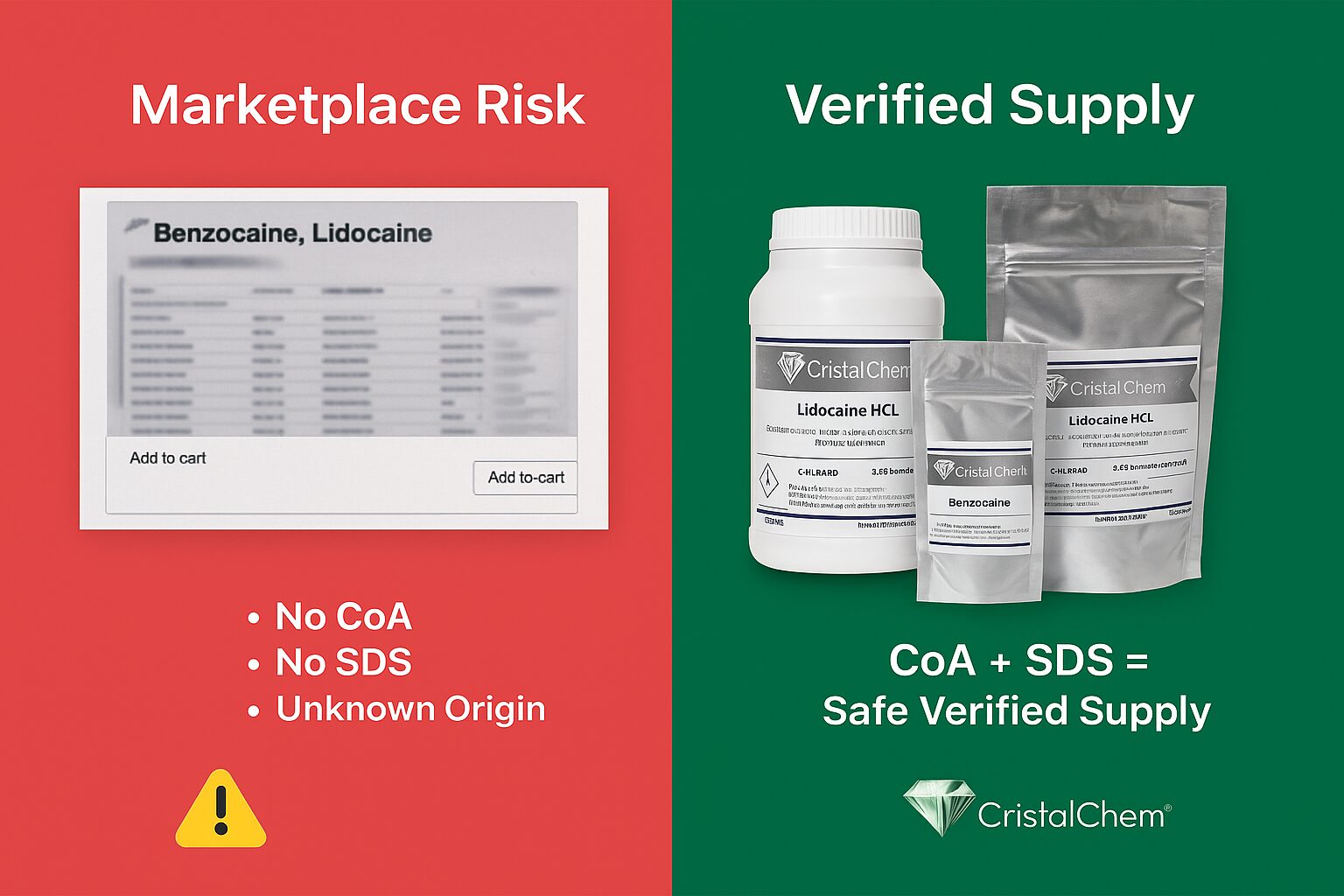
To be honest, many Chinese offers appear cheap but hide invisible costs. For example, some batches lack true COA traceability or include recycled certificates from older lots. In addition, residual solvent values can exceed ICH Q3C limits.
Because of this, buyers should audit suppliers before payment. Most importantly, choose vendors who offer full documentation and traceable batch IDs. For instance, CristalChem lists complete COA, SDS, and REACH references per shipment — a practice verified by independent QA auditors.
Cross-check with WHO GMP guidelines and ECHA CLP rules to see why documentation compliance is worth the extra cost.
Altogether, these documents prove the batch is authentic and ready for QA release. Additionally, they speed up customs clearance under DDP terms.
See our Import Checklists and SDS Library for templates and examples.
Nowadays, clients also evaluate pack materials. CristalChem uses HDPE recyclable drums and poly-liner bags certified for pharma use. Moreover, each pack is heat-sealed and tamper-evident. As a result, buyers receive clean and safe containers that meet both GMP and sustainability expectations.
Looking ahead, lead times will tighten as EU audits expand. Therefore, plan orders at least 6–8 weeks in advance. In addition, consolidate small lots into quarterly shipments to save logistics cost without compromising compliance.
For example, combine Lidocaine HCl with related actives like Benzocaine, Procaine HCl, or Phenacetin in the same shipment to reduce carbon footprint and import paperwork.
Above all, CristalChem focuses on traceable, fully compliant delivery. Because our partners are GMP-audited and REACH-registered, we can offer true DDP solutions to more than 40 countries. Consequently, clients receive legal, insured, and temperature-controlled shipments without hidden fees.
✅ Contact CristalChem for verified DDP Lidocaine HCl supply 2025/2026
In summary, pack size alone does not decide the real price of Lidocaine HCl. Instead, documentation quality, logistics method, and regulatory alignment build the final value. Therefore, choosing a supplier that integrates compliance and delivery is no longer optional — it is strategic.
By working with CristalChem, clients gain predictable imports and peace of mind. As a result, they can focus on innovation rather than logistics. Ultimately, transparent supply chains will shape the future of local anesthetics through 2026 and beyond.
This pricing guide complements our global “Where to Buy” overview.
Specifications discussed in What Is Lidocaine HCl? impact both compliance and landed cost.
⚠️ Disclaimer: All information provided in this article is intended solely for scientific, educational and research purposes! The data, specifications and analytical notes are based on available laboratory literature and internal R&D testing. CristalChem does not guarantee completeness or absolute accuracy of the information presented — users should independently verify all details before use in their own research environment. All reagents mentioned are strictly for laboratory and R&D applications only. Not for human or veterinary use!

Chemical Research Writer at CristalChem Academy. Passionate about chemistry, R&D, and turning laboratory insights into global wellness and industrial innovations.