GBP


In modern laboratory and OEM research, the phrase “sterile rehydration” refers to the controlled process of converting a dry active pharmaceutical ingredient (API) — such as Lidocaine HCl or other local anesthetic salts — into a sterile aqueous solution under validated, GMP-compatible conditions. The goal is not home preparation or clinical administration, but proper documentation and quality control of test solutions used in R&D or analytical validation.
Because the global regulatory environment has tightened significantly since 2023, rehydrating APIs now requires strict alignment with REACH/CLP, FDA 21 CFR Part 211, USP <797>, and MHRA GMP Annex 1 standards. Therefore, this article focuses exclusively on laboratory-grade, non-clinical workflows — it is not a do-it-yourself guide and must never be used for human or veterinary application.
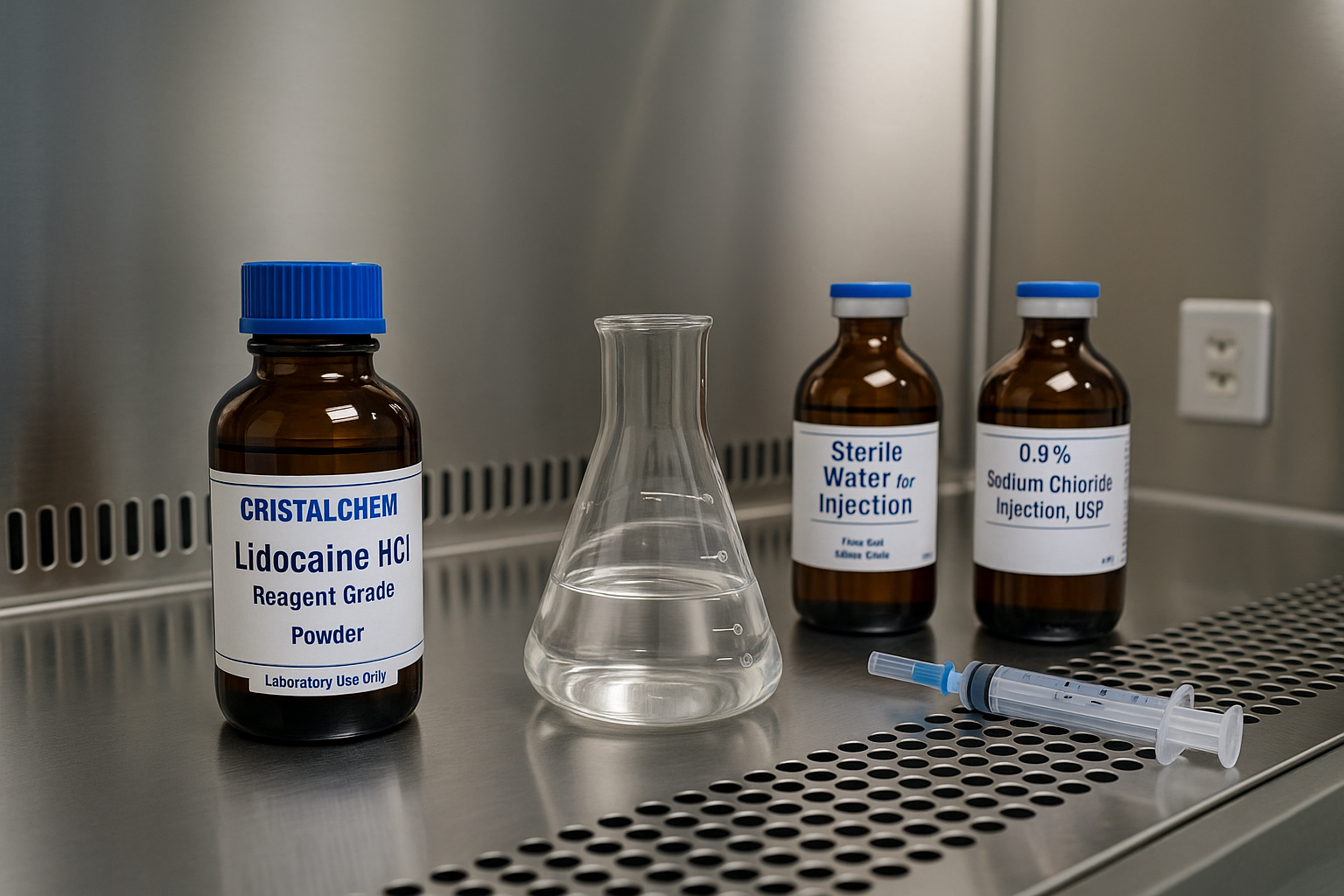
In regulatory language, “rehydration” means adding a controlled solvent to a solid reagent to prepare a solution or dispersion for analytical or formulation testing. For example, Lidocaine HCl may be reconstituted in sterile water for injection (WFI) or buffered aqueous solution purely for R&D, not for clinical use.
Key considerations include solvent grade, sterility assurance level (SAL), particulate control, and endotoxin management. When a lab performs such preparation, every step should be documented within a batch record or R&D logbook, referencing the COA and SDS of both solute and solvent.
Laboratories conducting rehydration and sterile prep must ensure compliance with the following pillars:
Each of these standards emphasizes documentation, traceability, and risk-based validation rather than casual or improvised preparation.
Every sterile preparation begins with solvent selection. Use only Water for Injection (WFI) or equivalent sterile-grade solvent with an endotoxin limit ≤0.25 EU/mL. Before adding any solute, ensure that the solvent lot has a valid COA, pH certificate, and microbial test report. Record batch numbers in your lab logbook.
Filtration is the second key element. Laboratories typically use 0.22 μm membrane filters validated for bacterial retention (per ISO 13408-2). For non-clinical R&D, this step provides sufficient assurance without triggering clinical GMP classification. However, filters must be sterile, integrity-tested, and single-use.
| Document | Purpose | Verification Point |
|---|---|---|
| COA of API (e.g., Lidocaine HCl) | Verify purity, identity, and batch traceability | Ph. Eur./USP monograph compliance |
| SDS of API and solvent | Ensure safety and hazard communication | Latest revision, matching CAS and EC numbers |
| Batch logbook entry | Record rehydration date, operator, and quantities | QA review signature |
| Equipment calibration log | Confirm balance, pH meter, and temperature probe accuracy | Valid calibration certificate |
| Filter integrity test record | Confirm filter pore size and validation | Per ISO 13408-2 |
| Label and container record | Prevent misidentification of sterile solutions | Cross-check expiry and batch numbers |
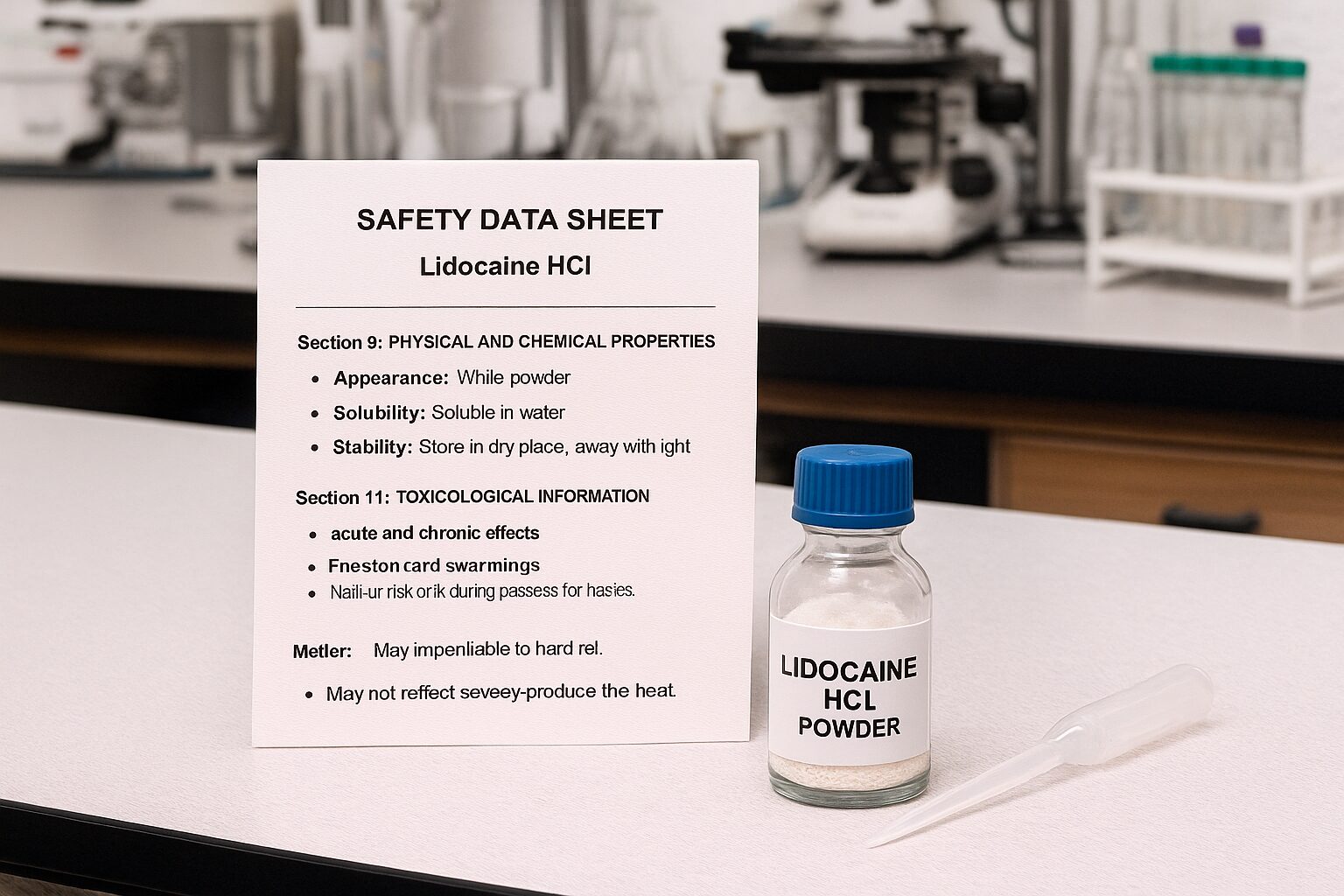
Rehydration and sterile prep rely heavily on reagent quality. Therefore, use only verified, laboratory-grade materials with complete COA + SDS. In research environments, traceability to a registered supplier is crucial for audits.
All above materials are available from CristalChem Reagents for legitimate laboratory and OEM use only.
Many customs holds and regulatory alerts stem from incomplete documentation rather than chemical composition. The most common mistakes include:
To avoid these pitfalls, build a Regulatory Folder for each project containing COA, SDS, import permit (if required), sterilization records, and supplier audit summary. For EU and UK imports, align with MHRA GDP/GMP guidance.
Even sterile-prepared research solutions must be disposed of under chemical waste protocols. Never discharge active-containing liquids into public drainage. Neutralize or collect waste according to local regulations. For EU laboratories, refer to the ECHA Waste Framework; for US labs, see EPA RCRA Hazardous Waste Regulations.
Rehydration and sterile preparation are legitimate laboratory activities — but only under the right regulatory framework. Laboratories must treat every operation as an auditable process, maintaining documentation, validated materials, and clear traceability. In 2025/2026, global regulators prioritize data integrity and GMP-aligned traceability. Therefore, compliance is not an optional burden; it is the foundation of credible scientific work.
CristalChem Reagents supports researchers by providing reagent-grade APIs and excipients, each supplied with verified COA and SDS, ensuring conformity with EU, UK, and US documentation standards.

Identity, EC/CAS and pharmacopoeial status are detailed in What Is Lidocaine HCl?
For documentation-driven logistics, consult Lidocaine HCl Price by Pack Size — DDP.
⚠️ Disclaimer: All information provided in this article is intended solely for scientific, educational and research purposes! The data, specifications and analytical notes are based on available laboratory literature and internal R&D testing. CristalChem does not guarantee completeness or absolute accuracy of the information presented — users should independently verify all details before use in their own research environment. All reagents mentioned are strictly for laboratory and R&D applications only. Not for human or veterinary use!

Chemical Research Writer at CristalChem Academy. Passionate about chemistry, R&D, and turning laboratory insights into global wellness and industrial innovations.