
USD

Boric acid (H₃BO₃) remains one of the most essential raw materials in laboratories and industry. It comes in two popular forms: flakes and chunks. Although both share the same chemical structure, they behave differently during processing and application. Understanding these differences helps you choose the right grade for your work — whether it’s research, manufacturing, or formulation.
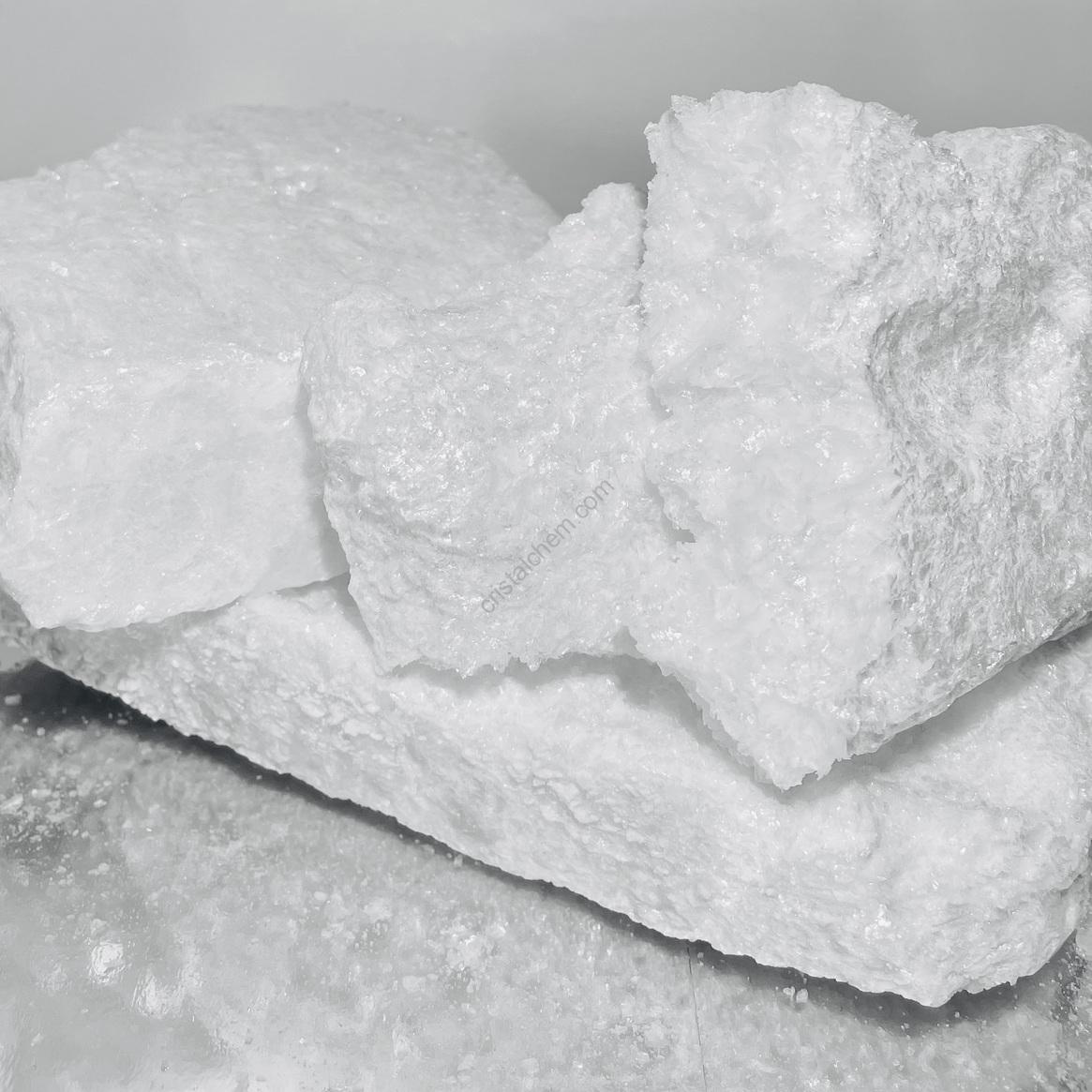
Boric Acid Flakes dissolve faster and provide high surface contact with solvents. Therefore, they’re ideal for analytical buffers, cosmetics, and R&D applications. In contrast, Boric Acid Chunks dissolve slowly but offer thermal stability, making them perfect for glass, ceramics, and metallurgy.
Moreover, flakes generate less dust during handling, which is safer for lab staff. Meanwhile, chunks can withstand long transport without breaking apart. As a result, CristalChem customers often select flakes for laboratory use and chunks for industrial production lines.

Both forms share the same CAS number 10043-35-3 and identical chemical properties. However, their particle size, density, and surface area lead to different results in solution preparation and heat processing.
Additionally, the difference in grain size affects logistics. Flakes pack more efficiently, while chunks require stronger packaging to prevent crushing during transit.
Learn more about reagent structure impact in Phenacetin Crystalline Powder — another compound where particle form directly affects performance.
Boric acid’s unique chemistry enables wide applications — from borosilicate glass production and ceramic glazes to antiseptic and preservative R&D. Laboratories prefer flakes for precise weighing and analytical work. Industrial users rely on chunks for stability and high-temperature reactions.
Moreover, boric acid acts as a mild cross-linking agent and flame retardant. It also finds applications in lubricants, metallurgy fluxes, and electroplating solutions. Its versatility is similar to other CristalChem reagents like Procaine HCl vs Benzocaine & Lidocaine UK.
Always store boric acid in a dry, sealed container away from strong bases. Follow the SDS guidelines for laboratory safety. CristalChem delivers each batch with digital COA (Certificate of Analysis) and SDS, ensuring full traceability under REACH and CLP compliance.
Furthermore, our packaging reduces contamination risk and meets ISO 9001 standards. Every COA batch report is archived for five years to maintain analytical traceability.
Choose Boric Acid Flake 99.9% for precision lab work, where fast dissolution and low residue are critical. Select Boric Acid Chunk 99.9% for industrial or high-heat applications where stability matters more than speed. Both are available from CristalChem with guaranteed quality and worldwide door-to-door delivery.
Related discussions of purity and sourcing can also be found in Boric Acid Flake & Chunk Overview and Procaine HCl Global Supply 2026.
⚠️ Disclaimer: All information provided in this article is intended solely for scientific, educational and research purposes! The data, specifications and analytical notes are based on available laboratory literature and internal R&D testing. CristalChem does not guarantee completeness or absolute accuracy of the information presented — users should independently verify all details before use in their own research environment. All reagents mentioned are strictly for laboratory and R&D applications only. Not for human or veterinary use!

Chemical Research Writer at CristalChem Academy. Passionate about chemistry, R&D, and turning laboratory insights into global wellness and industrial innovations.