
USD


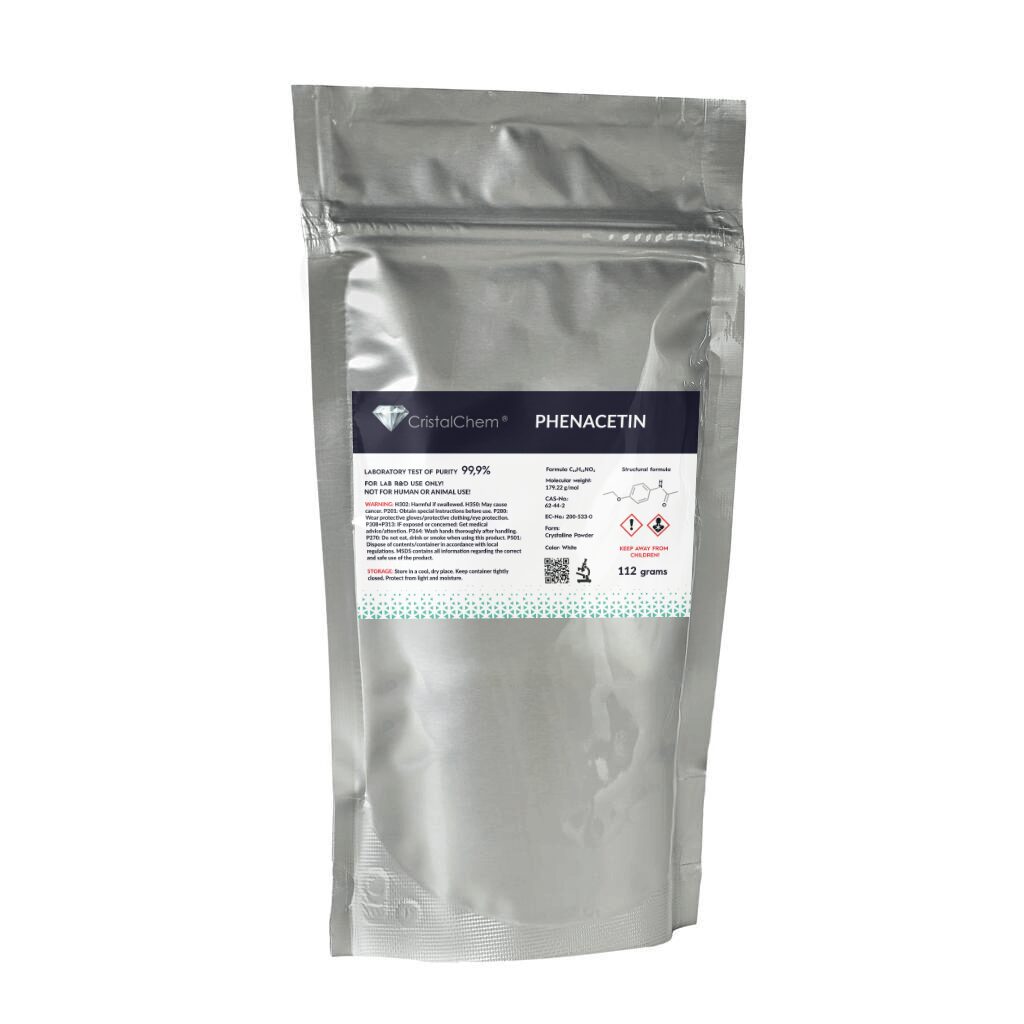
Phenacetin crystalline powder (CAS 62-44-2) is an acetanilide-derived compound with a long and complex pharmacological history. While its clinical use has been discontinued across many jurisdictions, phenacetin remains highly relevant to R&D as a comparative reagent, analytical standard (HPLC/UPLC/LC–MS/GC–MS), a teaching model for metabolism (O-deethylation to acetaminophen), and a stability/permeation probe in formulation science. At CristalChem we supply lab-grade Phenacetin with safe worldwide delivery to the USA, Canada, UK, Ireland, Northern Ireland, Scotland, Germany, Netherlands, Belgium, France, Spain, Italy, Sweden, Estonia, Latvia, Cyprus, Ibiza, Albania, Croatia, Hungary, Serbia, Romania, Bulgaria, Slovakia, Australia, New Zealand, Mexico and more.
Buy Phenacetin crystalline powder – safe worldwide delivery
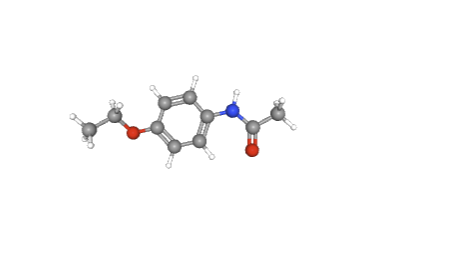
Molecular structure (SVG/PNG) Phenacetin molecular structure CAS 62-44-2 CristalChem
Reference data: PubChem — Phenacetin (CID 4754) · NIST Chemistry WebBook — Phenacetin · ChemSpider — Phenacetin (ID 4590) · ECHA — Registration Dossier: Phenacetin
UV–Vis: method-dependent λmax around 245–275 nm (HPLC–UV friendly). IR: amide carbonyl and ethoxy bands; NMR: aromatic and ethoxy signals enable clear confirmation. In chromatography, phenacetin demonstrates reproducible retention on C18 phases, supporting system suitability, linearity, and robustness checks across HPLC and UPLC platforms.
The hallmark biotransformation is O-deethylation to acetaminophen (paracetamol), used as a CYP1A2 probe reaction. Additional routes (N-deacetylation, N-hydroxylation) and the generation of reactive metabolites underpin historical toxicity profiles in long-term exposure scenarios.
Request CoA & SDS for Phenacetin crystalline powder
Historically, chronic phenacetin ingestion was associated with analgesic nephropathy and increased risk of urinary tract cancers. Mechanistically, reactive intermediates formed via CYP-mediated pathways are implicated in protein/DNA adducts and downstream cellular injury. In modern labs, phenacetin is handled strictly as an R&D analyte under rigorous SOPs (PPE, ventilation, documentation).
As a stable analytical standard, phenacetin supports HPLC/UPLC and LC–MS workflows, enabling system suitability, calibration linearity, LOD/LOQ determination and forced-degradation selectivity verification. Its consistent UV response is ideal for training new analysts and validating robustness.
Phenacetin remains a powerful anchor for teaching modules that contrast legacy acetanilide analgesics with modern safety paradigms (e.g., acetaminophen). It illustrates CYP1A2 probe usage, inhibition/induction studies and the implications of reactive metabolites in risk assessment.
Moderate lipophilicity and solvent-dependent solubility make phenacetin well-suited to solvent mapping (water/ethanol/PG; PG/IPA), thermodynamic modeling, and introductory permeation tests (e.g., Franz cells for educational purposes).
Goal: concurrent assay of phenacetin and acetaminophen for metabolism/forced-degradation workflows.
Standards: 5–200 μg/mL; verify linearity (R²≥0.999), precision (RSD<2%), accuracy (recoveries 98–102%).
Goal: quantify acetaminophen formation.
Readings: Springer — O-deethylation; Guengerich — P450 & Chemical Toxicology.
Goal: thermodynamic mapping for solution prep and permeation pilots.
Stress solutions by heat/light/oxidation; evaluate peak purity (DAD) and confirm degradants by LC–MS. Document mass balance and pathways for method selectivity claims.
Create an integrated module (phenacetin → acetaminophen) combining CYP kinetics, inhibition/induction, reactive metabolite risks, and regulatory narratives.
Talk to our technical team about HPLC/LC–MS methods
While phenacetin is no longer a therapeutic, B2B R&D and QC demand persists — spanning non-opioid pain research, formulation modeling, metabolism training and analytical education. Market context and trajectories:
Regions we serve: USA, Canada, UK, Ireland, Northern Ireland, Scotland, Germany, Netherlands, Belgium, France, Spain, Italy, Sweden, Estonia, Latvia, Cyprus, Ibiza, Albania, Croatia, Hungary, Serbia, Romania, Bulgaria, Slovakia, Australia, New Zealand, Mexico — with compliant documentation and packaging for safe worldwide delivery.
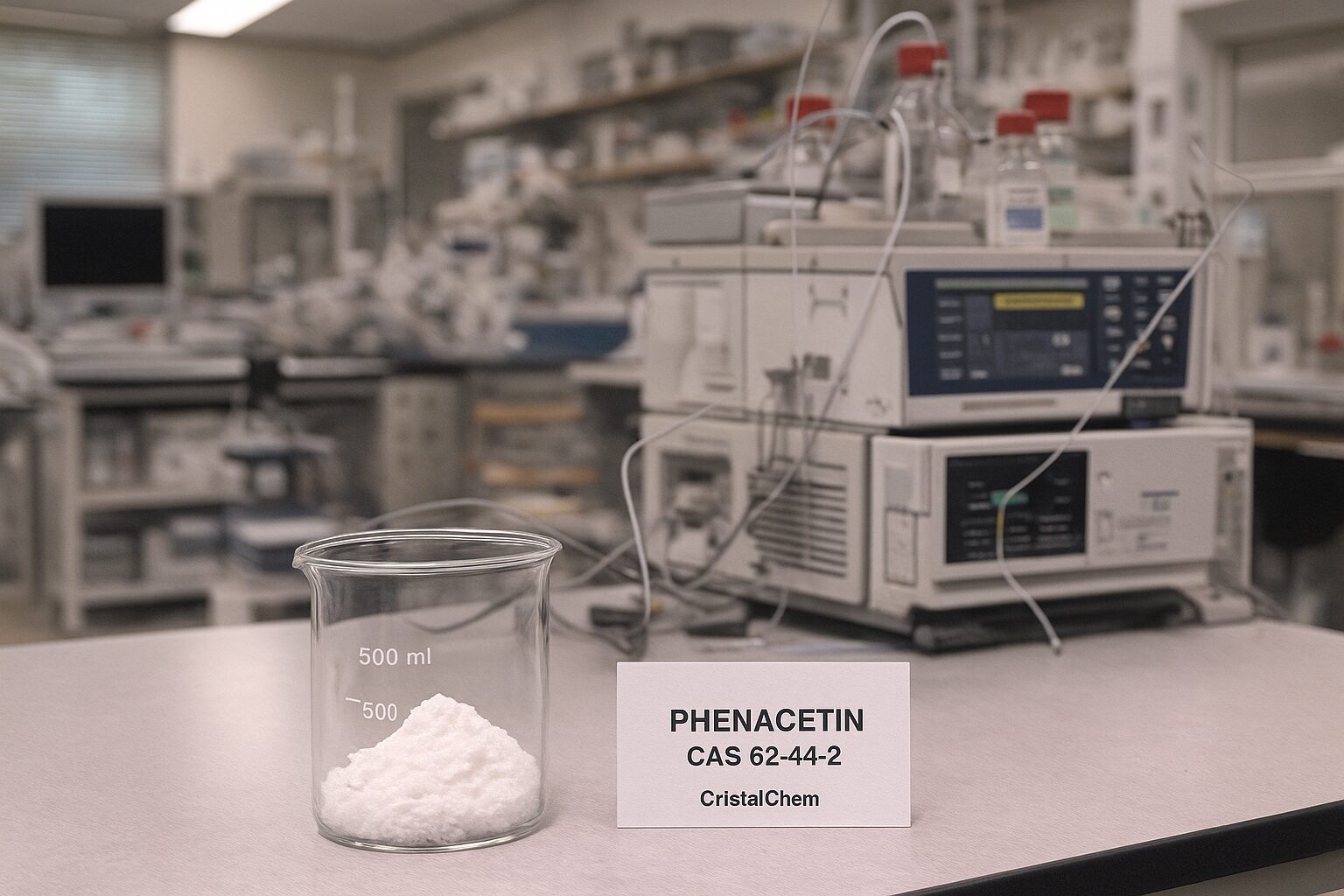
R&D / analytical lab bench
Phenacetin R&D laboratory CAS 62-44-2 CristalChem
For cross-border shipments, ensure documentation and packaging are aligned with importer requirements and carriers that accept chemicals:
Order Phenacetin in bulk — lab packs & QA documentation
Request a Phenacetin sample for method development
Audience: contract research organizations, pharma QC labs. Value: validated, traceable Phenacetin crystalline powder with CoA/SDS, batch documentation, and consistent performance across HPLC/UPLC/LC–MS setups. Outcome: reduced variability, faster method transfer, smoother audits.
Audience: universities and training centers. Value: pre-packaged experiments (kinetics, CYP modulation, forced degradation, chromatography basics). Outcome: cohesive, safe, and reproducible training modules for students and technicians.
Audience: formulation R&D groups. Value: solvent/permeation mapping with phenacetin as a proxy for moderately lipophilic actives; binary solvent data (PG/IPA, water/ethanol/PG) to calibrate predictive models. Outcome: efficient screening and better model generalization.
Ask about Phenacetin teaching kits (universities)
Use Phenacetin crystalline powder across multiple systems (brands, column lots) to ensure comparable N, k, tailing and Rs against your target analytes. Adopt orthogonal checks (pH tweaks, ionic strength, organic composition) to demonstrate method ruggedness.
ESI(+) is commonly used; optimize source temperatures, gas flows and cone voltages for clean molecular ion detection. For MS/MS confirmation, establish fragments for phenacetin and acetaminophen, building a small fragment library for method transfer between labs.
Consider derivatization (e.g., silylation) where volatility is insufficient, or target impurities/degradants amenable to GC. Always cross-check mass balance with LC–MS to support forced-degradation claims.
PubChem — Phenacetin (CID 4754) · NIST — thermochemical & spectral data · ChemSpider — identifiers & suppliers · ECHA — dossier & hazard
Get the Phenacetin method-transfer pack
USA & Canada: emphasis on analytical compliance and method transfer within networks of CROs and pharma; swift logistics essential. UK, Ireland, Northern Ireland, Scotland: university/teaching demand, tattoo/cosmetic R&D training, regulatory diligence. Germany, Netherlands, Belgium, France, Spain, Italy, Sweden: strong analytical science base and equipment diversity — robust system suitability demand. Estonia, Latvia, Romania, Bulgaria, Slovakia: sustained growth of university and CRO ecosystems. Australia & New Zealand: long-haul logistics with temperature notes; documentation and customs clarity are key. Mexico: expanding CRO and pharma QC footprints.
Order Phenacetin QC standard packs
Q1. Is Phenacetin crystalline powder suitable as a GLP reference standard?
A: Phenacetin is widely used as an analytical/QC reference. For GLP contexts, ensure CoA/SDS, purity specs, and internal qualification runs are documented. Consider third-party confirmation if required by your QA.
Q2. Does Phenacetin require cold-chain shipping?
A: Typically no; store dry, cool, protected from light. For certain regions (Australia, New Zealand) or summer transits, temperature notes and insulated secondary packaging are recommended.
Q3. What’s the recommended wavelength for HPLC–UV?
A: Many methods use 254 nm; verify your method’s λmax in 245–275 nm and confirm specificity with DAD and LC–MS.
Q4. Can I use Phenacetin in topical formulation pilots?
A: Only for R&D/educational purposes in compliant facilities. It is not for human or veterinary use.
Q5. Which internal CristalChem pages should I review for related reagents?
A: See Benzocaine, Lidocaine HCl, Procaine HCl, Caffeine anhydrous, Paracetamol, and our SDS Guide:
Set up a standing order (monthly/quarterly)
Phenacetin crystalline powder (CAS 62-44-2) remains a robust platform for modern R&D: analytical method development, stability/permeation studies, comparative metabolism and didactic modules. If you need assured quality and compliant logistics, rely on CristalChem’s safe worldwide delivery across the USA, Canada, UK, Ireland, Northern Ireland, Scotland, Germany, Netherlands, Belgium, France, Spain, Italy, Sweden, Estonia, Latvia, Cyprus, Ibiza, Albania, Croatia, Hungary, Serbia, Romania, Bulgaria, Slovakia, Australia, New Zealand, Mexico — and other destinations on request.
⚠️ Legal & Safety Notice: This article is for educational and informational purposes only. Phenacetin is supplied strictly for laboratory R&D and analytical use; not for human or veterinary applications. All work must be performed by qualified professionals in compliant facilities, following SDS and local regulations. CristalChem assumes no liability for misuse or accidents.

Chemical Research Writer at CristalChem Academy. Passionate about chemistry, R&D, and turning laboratory insights into global wellness and industrial innovations.